
Content note: this article discusses grief, depression, domestic abuse, and trauma.
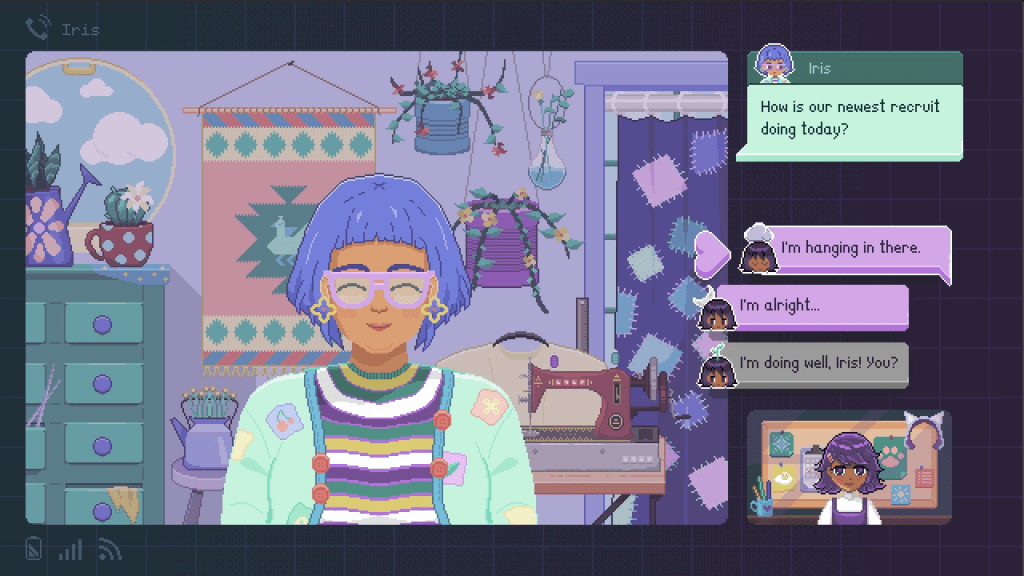
Fishbowl is a beautiful game. But it is also painfully domestic.
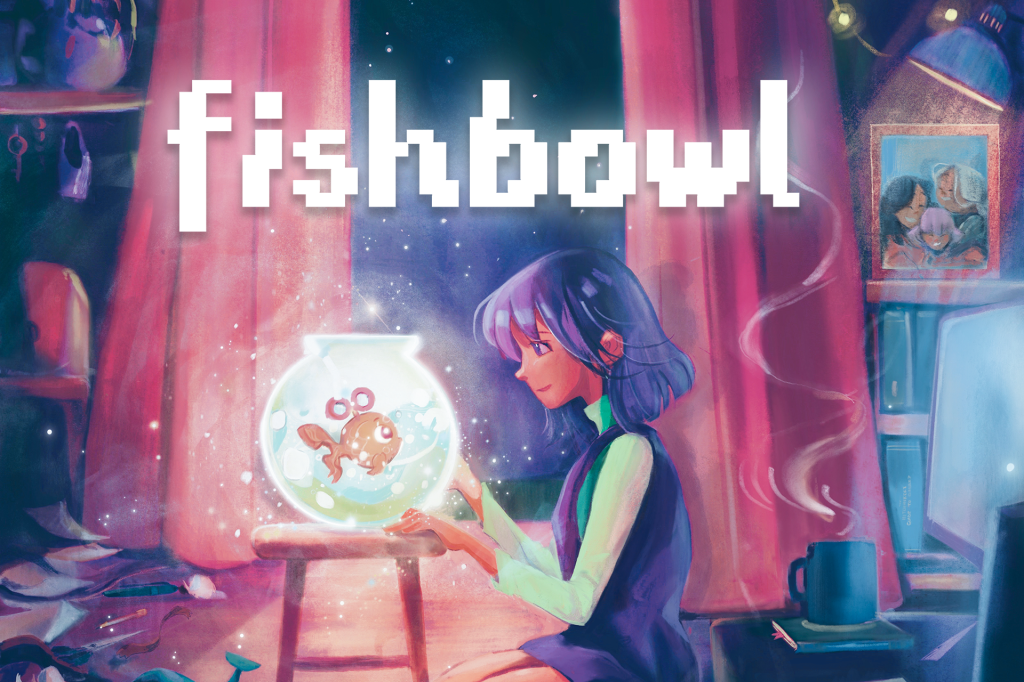
It follows Alo, a young woman who moves to the city for a new job, only to find that her new life begins in the total isolation of a global pandemic. Her apartment has everything you’d expect: a washing machine, dining table, bed, shower, a desk tucked into the corner of the living room, and, of course, a toaster. Because there’s always time for toast.
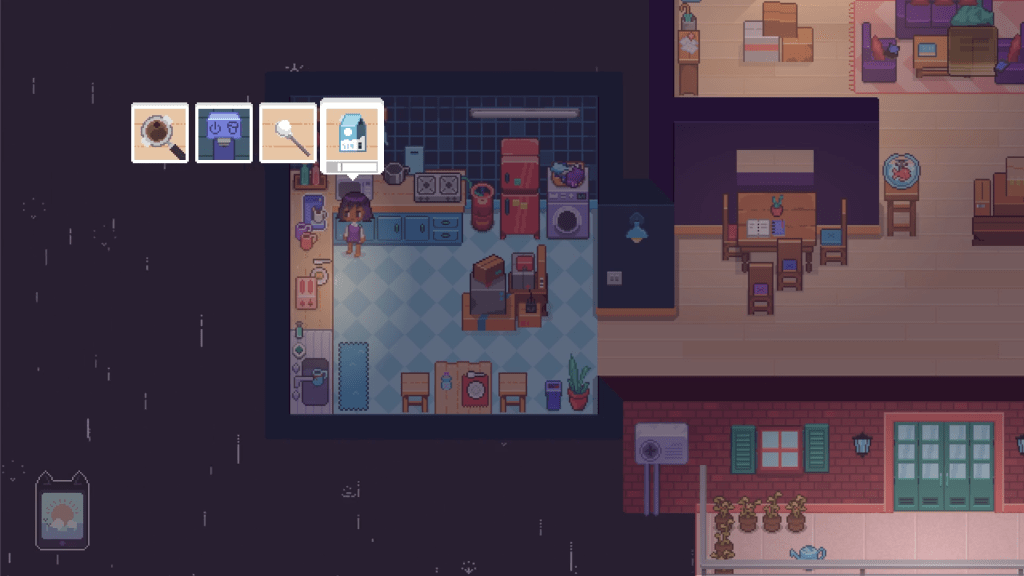
Interacting with appliances launches a minigame made up of sequential button presses and directional inputs, each accompanied by a beautifully illustrated freeze-frame of the action. Over the month in which Fishbowl takes place, that formula barely changes. Making coffee feels the same as brushing your teeth, which feels the same as doing the dishes, which feels the same as scrolling through your phone. You wake up, make it through another almost identical day, go to sleep, and repeat it all tomorrow.
The game quickly settles you into routine.
Except when you unpack.
In the wake of her grandmother’s recent passing, Alo agrees to help sort through her belongings. Perhaps out of desperation to break free from the monotony. More likely, as a kindness, and a way to stop those memories fading into obscurity.
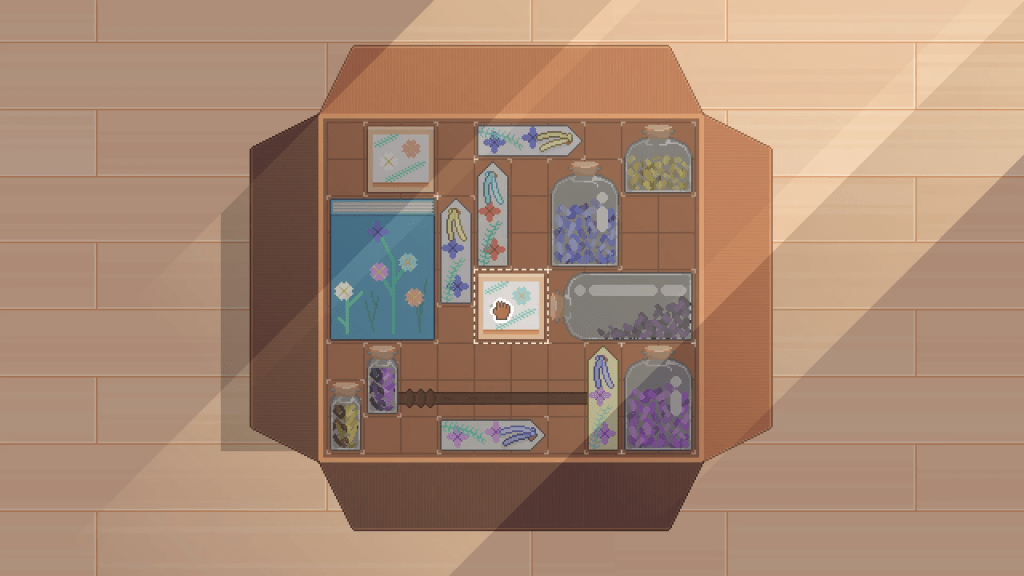
When the boxes arrive, there are, well, a lot of them. They pile up around the apartment, making it difficult to move from room to room without squeezing past cardboard and furniture. Much like any loss, it’s overwhelming. Alo only opens one or two boxes per day, confronting the loss the only way she knows how: slowly, carefully, and in manageable, bite-sized chunks.
Opening boxes, unlike the other minigames, is akin to a Klotski: a Polish block puzzle with the goal of freeing one specific piece from amongst a grid of sliding blocks. Except here, the pieces aren’t abstract shapes. They are her grandmother’s belongings.
The memories intertwined with those belongings are almost ethereal. Each dreamlike sequence interrupts the unrelenting monotony of daily life, offering — at least at first — a small pocket of warmth, colour, and childlike wonder away from the horror of the outside world.
It’s a good thing too, because the isolation is unrelenting. Alo’s apartment is surrounded by the ceaseless downpour of rain. In the back of a taxi, her face is framed against a wall of complete black, as if the world outside no longer exists.
What seems, on the surface, to be a cosy game about community and perseverance is something far more unsettling. As Alo’s grief digs in its claws, it becomes clear just how alone she feels. And by the time the sun sets and Alo tucks herself into bed, Fishbowl has stopped feeling like a cosy game.
It starts to feel like horror.
The horror inherent within Fishbowl isn’t your typical affair. There are no jump scares, no chase sequences, no demonic forces waiting in the dark. Its horror is far more personal.
It lives in dream sequences smothered in darkness, broken only by the soft purple glow of ghostly childhood apparitions and the menacing presence of an empty hospital bed. It lives in rows of computers bearing rejection letter after rejection letter. In crumpled paper scattered across the ground, each piece holding one of Alo’s failed attempts to put her grief into words, scratched out so violently that the paper itself begins to fray and tear.
A lot of people will find pieces of their own lives reflected in Fishbowl. Family Zoom calls. Binge-watching trashy TV. Doomscrolling to pass the time. The anxiety of loved ones falling ill. The horror of lying in bed while stories of dread cycle through the news.
In the aftermath of the global pandemic, video games became more than escapism. They became a way to make the world feel manageable as it shrank to the size of a living room. At the same time, routine itself became one of gaming’s most comforting mechanics.
When the outside world was overwhelming and isolating, games offered smaller worlds that could be cleaned, climbed, organised, decorated, and perfected. Games like PowerWash Simulator, A Short Hike, and Animal Crossing.
While those games don’t explicitly have you unpacking, do you know what game does?
Unpacking.
Obviously.
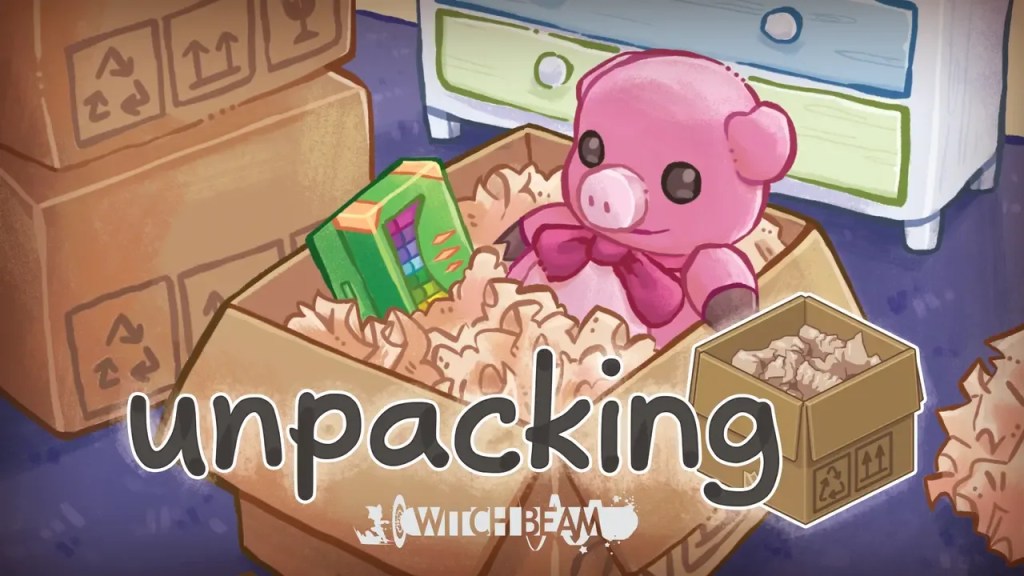
Looking back, I couldn’t have imagined a world where a developer pitches a game about unpacking boxes and millions of people go, “Fuck yeah, I love unpacking. Sign me up.” Yet Unpacking released to universal acclaim.
The game follows Sadie’s journey from childhood bedroom to university accommodation, to first boyfriend, to family home. Room by room, box by box, she discovers hobbies, develops her personality, and slowly grows into herself.
It’s difficult to avoid becoming attached.
Even harder when she starts to lose it all.
Everyone who has played the game talks about the degree certificate. And for good reason. After struggling to find space for your belongings in your boyfriend’s apartment, you pull it from the bottom of a box and are given only two options: hang it above the toilet or slide it under the bed. It’s a potent metaphor for the sacrifices we make for others, especially when those sacrifices mean losing a part of ourselves.
But I think there’s a more interesting metaphor hidden in that same stage. One I don’t see talked about nearly as much.
A little pair of green dumbbells.
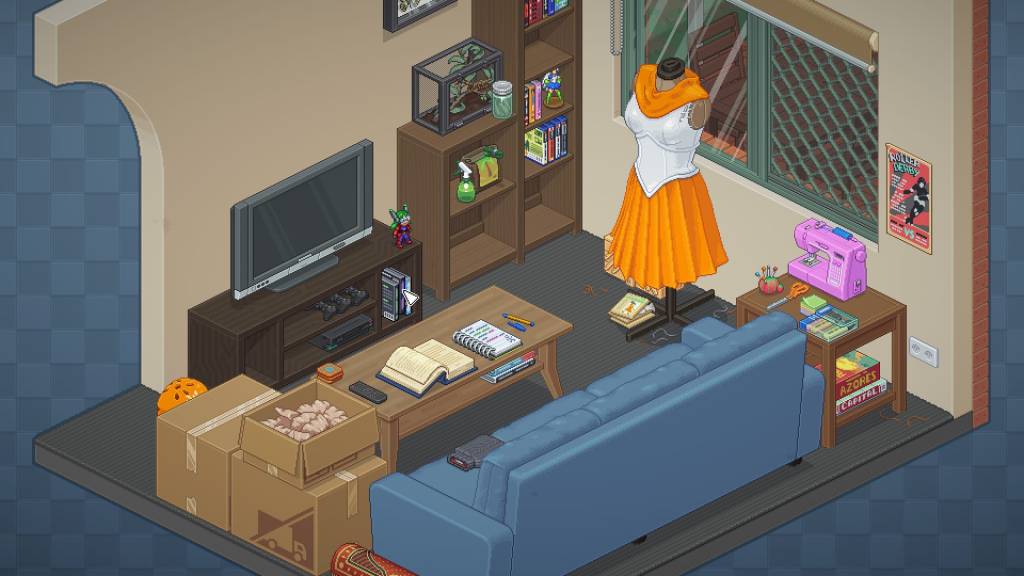
They first appear in 2007, when Sadie moves into a shared house. They seem like just another prop of young adulthood. The kind of thing you buy when you’re trying to become a slightly better, more disciplined version of yourself.
When you rack those dumbbells alongside her boyfriend’s, although they are never explicitly labelled, it is abundantly clear that his are much, much heavier. For me, this is a far more meaningful representation of the relationship’s power dynamic. One person — Sadie’s boyfriend — has more control. Her independence still exists, but her identity is smothered by the weight of her partner. She becomes a shadow of her former self.
It comes as no surprise, then, that over the following years Sadie seems determined to regain that control. She picks up climbing and martial arts, hanging her obi above her bed for anyone entering the room to see. It is a declaration. It says: I am taking back control.

Saying Sadie was abused is, admittedly, a stretch. The game never outright confirms it. But Unpacking does let you read between the lines and come to your own conclusions. So that is what I’m going to do. What she experiences feels like psychological pressure. Some of it external. Some of it internal. A pressure to conform to an expectation, and in doing so, she pushes herself so far into a box that she starts to lose track of who she is.
In that case, martial arts aren’t simply a metaphor for physical prowess, but for mastery. Not just mastery over the body, but over confidence. Discipline. Self-respect. Perseverance. A way to uncover the parts of her identity she thought were lost during that saga of her life.
Where unpacking does not directly confront the topic of abuse, Nina Freeman and her spouse, Jake Jefferies, face it head on in their 2021 game Last Call.
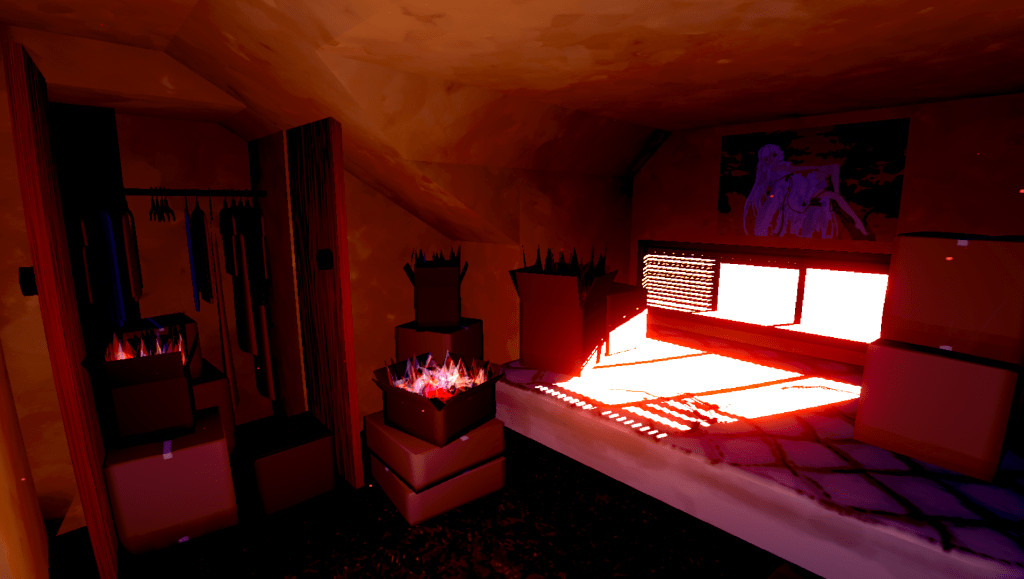
In a lot of ways, it’s an incredibly simple game, taking no longer than 30 minutes from start to finish, but it feels intensely intimate. It takes place in a dingy, claustrophobic apartment with very little natural light. Instead, the apartment is lit almost entirely by jagged flames protruding from a spattering of cardboard boxes.
Each box is stuffed to bursting with belongings, rendered in striking photographic detail against the relatively low-res apartment. You don’t really unpack anything, per se. You linger over the contents: toiletries, a PlayStation 3, manga, towels, clothes, shoes, one of those soft peas-in-a-pod things, and — wait, is that Dishonored? I love that game.
Everything is shoved into a mess of folded books, crumpled clothes, and tangled wires. Once you’ve taken in as much as you can bear, you seal the box and move on to the next.
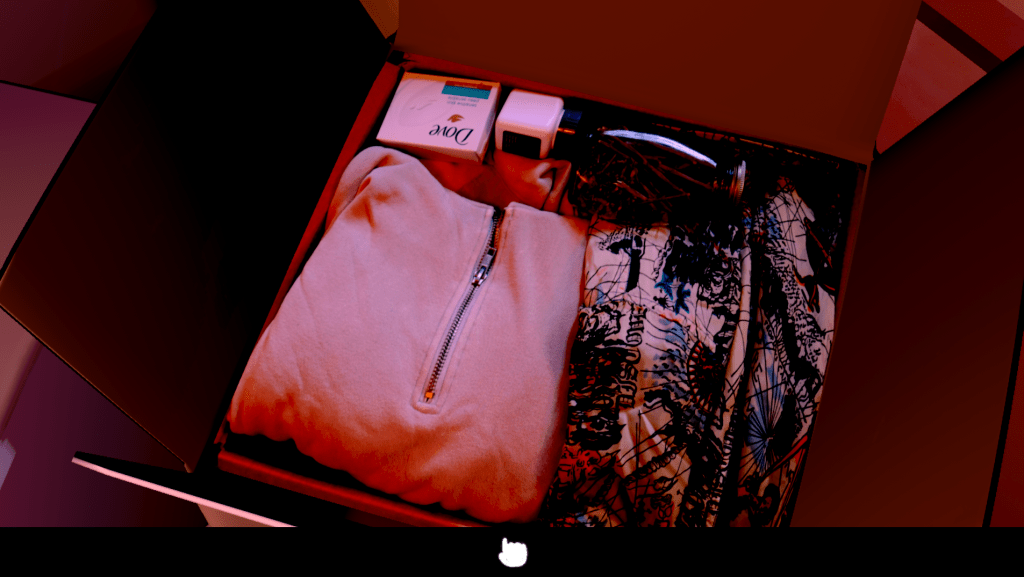
In some of the boxes, tucked down the edges, there’s a note. More precisely, a poem.
i could barely see his face when we met in a dark, loud bar
friends of friend, we were introduced
not a care in the world, just small talk
maybe only one cigarette later and i was in love
In an interview with Game Developer, Nina explained that Last Call helped her process her own experience with domestic violence. The poems chronicle that experience: living through an abusive relationship, recognising it for what it was, and eventually escaping.
Each poem, scrawled on stained paper, pulls the relationship further out of the shadows. One likens it to addiction. Another to a powerful drug. Another describes what can only be understood as public sexual assault, then tries to make it fit inside the fantasy of romance. As if violation could be mistaken for desire, and humiliation for proof of love.
i thought this must be normal
what is romance without the horror of humiliation
As the game progresses, the poems distort, moving from romance to horror. They linger, painfully, in the joy of it. The utter elation that someone like him could love someone like her.
and he said i love you!
he said it!
god i was happy
With each passing moment, each successive letter, the fantasy begins to thin. Reality slips through the cracks. The music settles until all you can hear are whispers.
he hits me
and hits me again
…
he punched the wall next to
my head
and left a hole
None of these games announce themselves as horror. The horror lives in the moments where everything appears normal, but something still feels wrong.
Alo’s memories are infested by hints of her darker mental state. She is trying to survive in a world where one of her foundations — an integral part of who she is — has gone. Everything she does is a constant effort to stay afloat. To keep herself above the surface. Otherwise, she’ll drown.
In Unpacking, every new space should feel like growth. A bigger room should come with more freedom, but somehow, those spaces begin to shrink. Your belongings no longer fit the way they used to. It feels like your potential is dwindling, until you are forced to hide an integral part of yourself.
But like most horror media, there is still a screen between you and the thing you’re afraid of. A final layer of safety. A screen that Last Call tries to break.
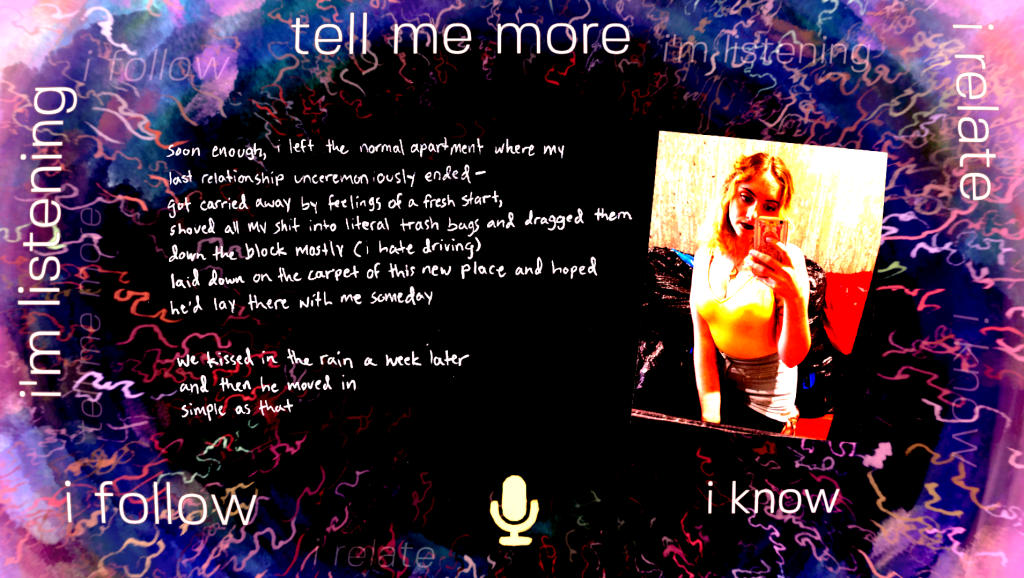
Progression in Last Call is tied to voice recognition. It’s a little like Before Your Eyes, where time lurches forward every time you blink, leaving you to strain under the weight of your own burning eyeballs. Except this time, you speak.
After each poem, you verbalise an affirmation of sorts. A recognition of what you’ve read. At first, it felt wrong. How could I even begin to understand what it’s like to be abused? I’ve never experienced anything like it. My responses felt more patronising than sincere. “I don’t know.” “I don’t understand.” I’m sorry, but I don’t. How could I?
But the more I played, the more time I spent in that apartment, with Nina’s belongings, reading her poetry, the more I started to understand what the game was asking of me. Not to pretend I could comprehend her experience. But to stop moving so quickly past it.
The voice recognition puts a speed limit on how you play. It forces you to pause, to acknowledge, to sit with what you’ve read before you’re allowed to move on.
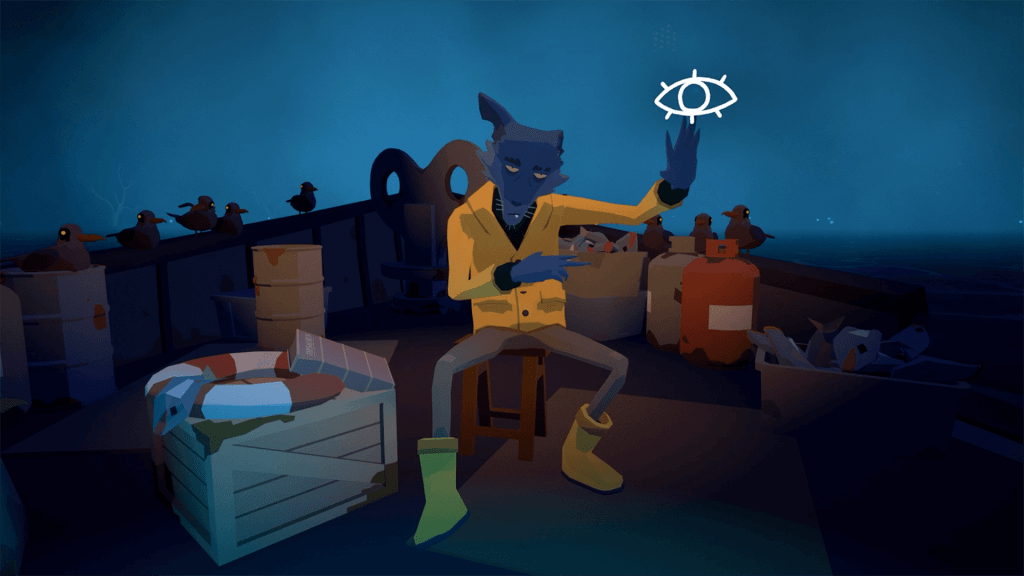
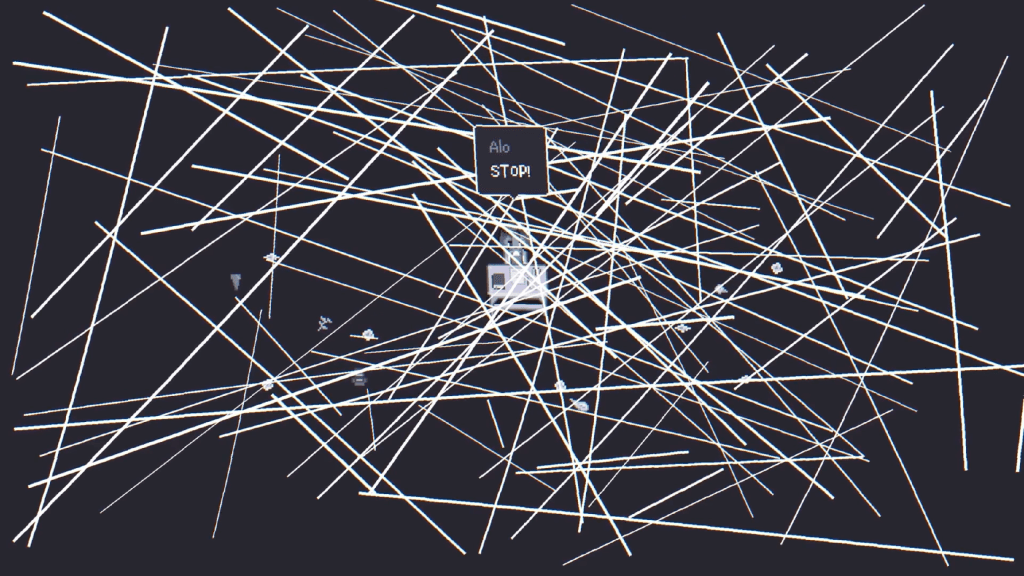
Playing again without voice recognition destroyed the experience, distilling it to little more than a series of repetitive button presses. It felt like playing Unpacking, but instead of meticulously organising each room, you shove any random object into any random corner just to roll credits. Like playing Fishbowl while ignoring the greyed-out dialogue options, ignoring the cries for help that Alo is too scared, or somehow too embarrassed, to verbalise.
Ignoring the speed limit. Ignoring the carefully crafted glimpses into the protagonists’ mental states. Because to truly unpack how you feel, first, you have to confront the fear head-on.
During the development of Unpacking, creative director Wren Brier was diagnosed with MS. Each of the game’s levels is imprinted with remnants of that struggle. A once-solitary first-aid kit gradually becomes an exhaustive medical cabinet: pain medication, tiger balm, heat patches. A wrist brace appears beside her computer. A walking stick rests among umbrellas by the front door.
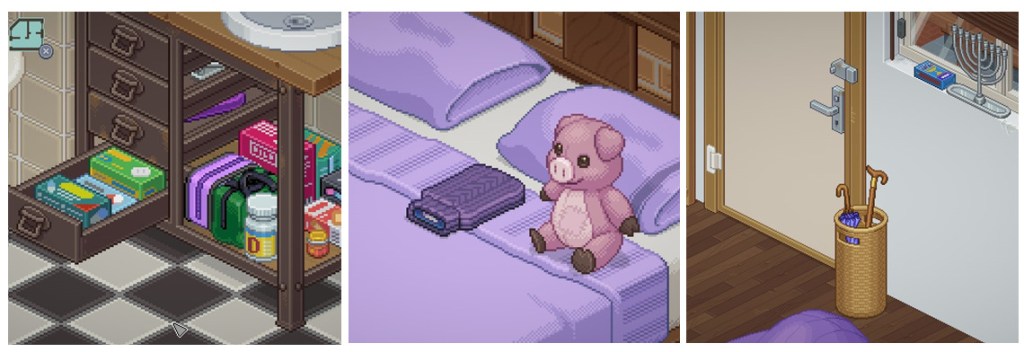
The game never explicitly explains the betrayal of a body becoming increasingly indifferent to its own commands. It just lets you unpack the evidence.
As we age, we inevitably accumulate scars. Some are physical. Others are hidden beneath the surface, packed away in the hope they might be forgotten. But sooner or later, the box has to be opened. Only then can you begin to understand the permanence of what you’ve been carrying.
Recovery and healing are not quick. There isn’t a reset button, or a clean save file, or a second attempt where everything goes right. But through the isolation, through the grief, through the abuse, through the dark, there is always light.
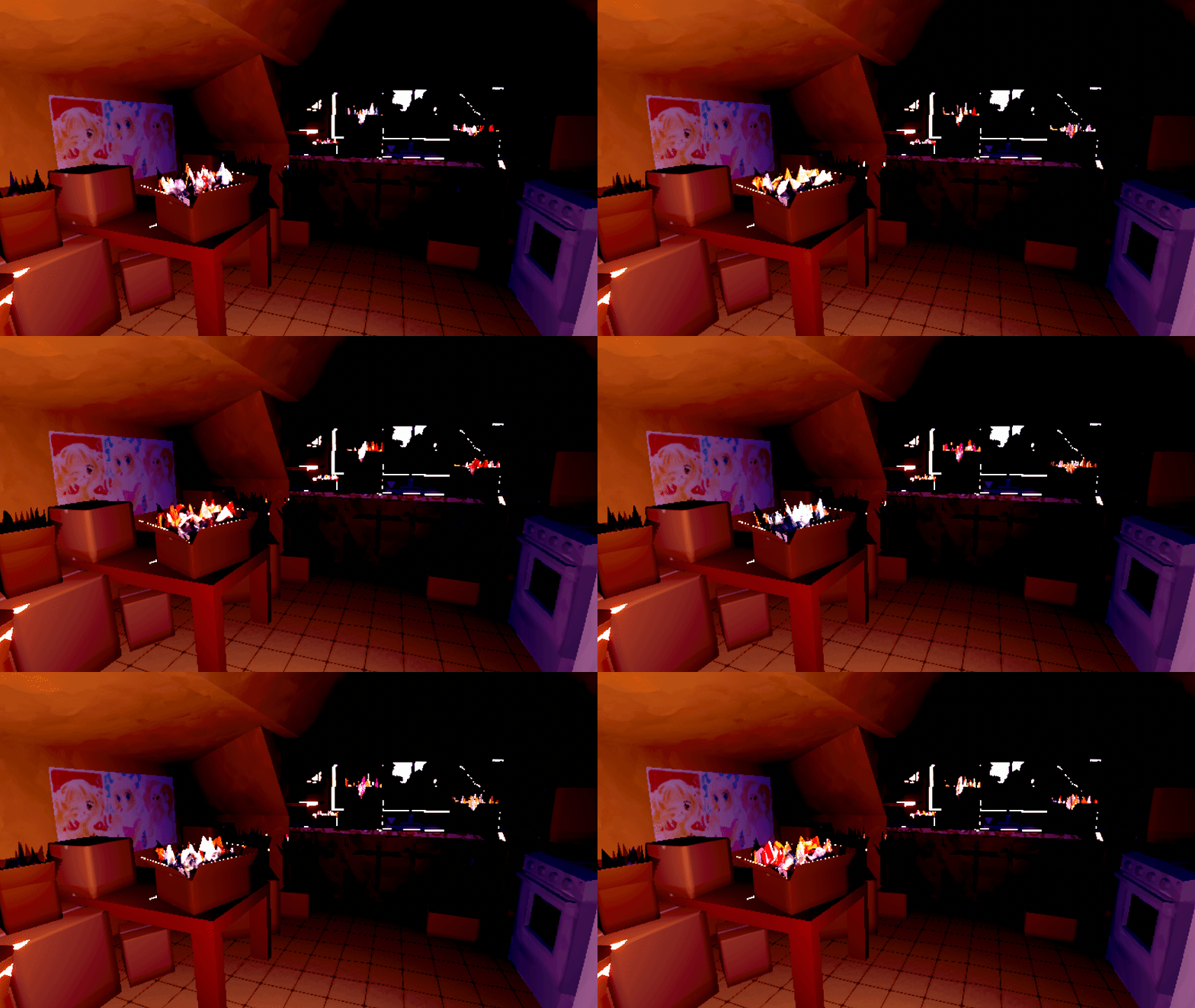
In the final moments of Last Call, in a moment of self-realisation, you repair the hole in the wall. As you do, light pours through the blinds, and the once dimly lit apartment becomes something else. The structure hasn’t changed, exactly. The boxes are still there, engulfed in the same fiery textures as before. But they don’t seem as terrifying now that they’re no longer the only source of light.
The moment you get your own — I mean, truly your own — apartment in Unpacking, it’s not perfect. It’s filled with cheap plastic containers. The blinds barely work. Paint peels from the walls, the kitchen surfaces are rusted brown, and, in the background, an air-conditioning unit hums like it’s on the edge of giving up.
There are echoes of your life before. The old posters have faded. The plush pig that’s been with you since childhood now has a sizable gash across its body. And yet, everything finally has a place. No more pandering to a boyfriend. No squeezing yourself into an already-packed student house. No compressing the entirety of your adult existence back into your childhood bedroom.
You can finally live your own life.
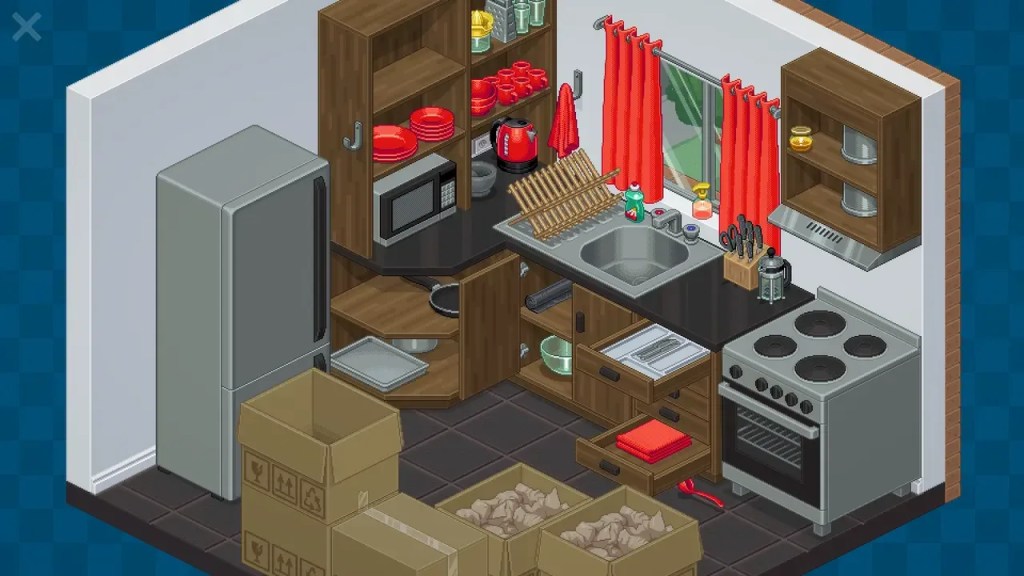
The subtle details throughout Last Call, Fishbowl, and Unpacking speak to the developers’ understanding of healing. Their endings are, in a sense, happy. They end on a positive sentiment that highlights the light at the end of the metaphorical tunnel. But they do not pretend the darkness was never there.
Each developer put a piece of themselves into their game. A fragment of grief, abuse, illness, and fear. And by translating those experiences into playable media, private pain becomes something others can pick up and reflect on.
In many ways, by playing, we unpack too. Not just their experiences, but our own. What we’ve been carrying. What we’ve hidden away. What we are finally ready to look at.

These games aren’t pretending to be therapy. But they show you how others made it through.
At the end of Fishbowl, after the nightmares, the isolation, the dreams, the rain, and the month-long work of survival, Alo offers the simplest distillation of that hope:
No matter what, you got through the day.
This essay was adapted from a video essay. You can watch the full video essay below.

