
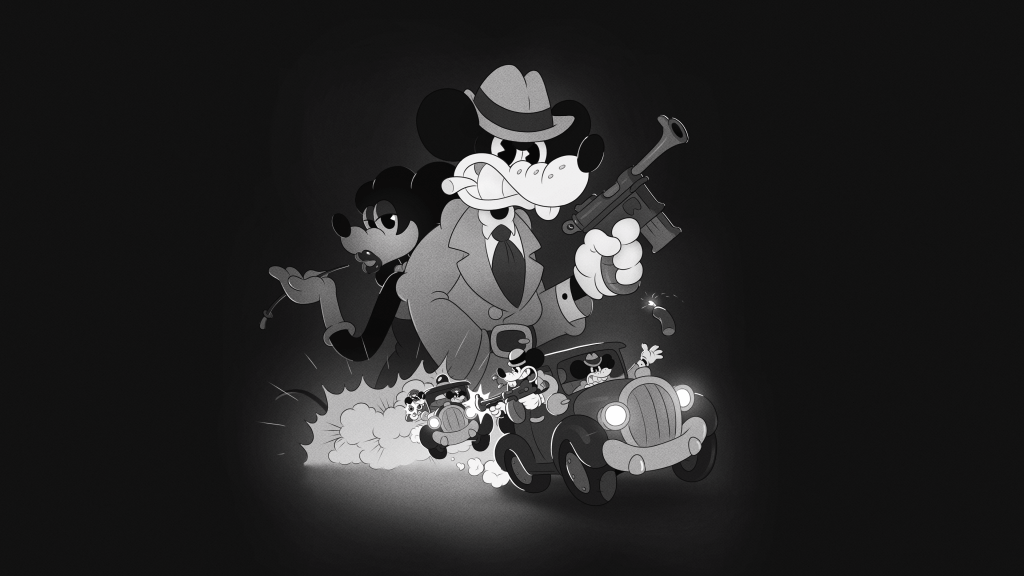
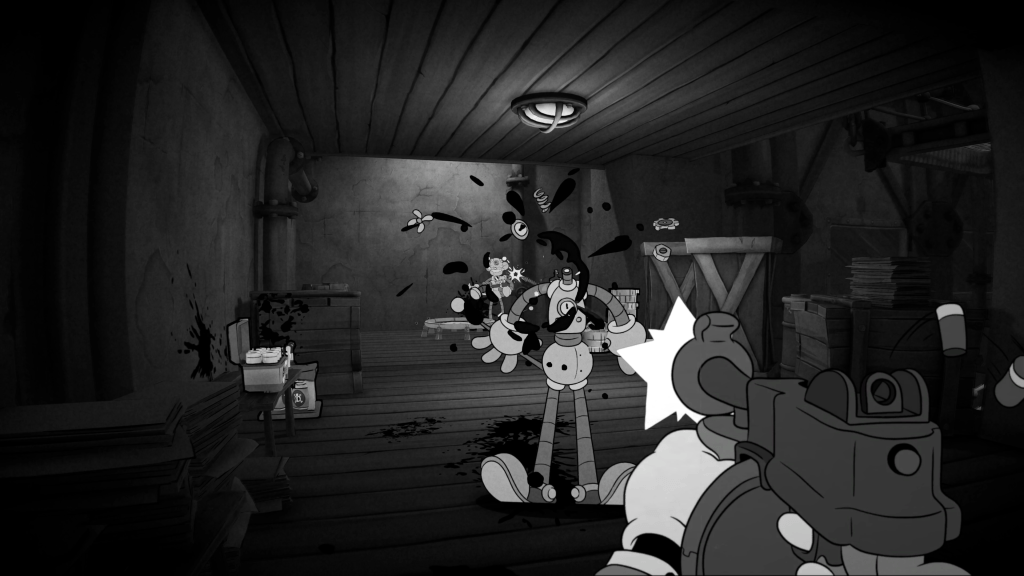
You don’t have to look hard to find Mouse: P.I. For Hire’s inspirations. Detective Jack Pepper’s weapons bend and sway in the breeze, sometimes reloaded with a sharp slap to the side of the barrel. The 1930’s Disney pioneered ‘rubber hose’ animation makes for a wonderful showcase of creativity, especially when pressed against the grunge, noir, mob-controlled streets of the fictional Mouseburg.
Those inspirations go beyond the purely visual, the arena-based combat encounters borrow many mechanics from the boomer shooter genre. Jack Pepper dashes from room to room, only inhibited by the generous stamina bar. He can double jump, wall dash, and his tail can be used as a grappling hook to cross gaps with ease. Moment-to-moment gameplay is fast paced and frantic, but when a hoard of combatants is running you down and staying constantly mobile is the only chance of survival, it’s vital that the game is as readable as possible.
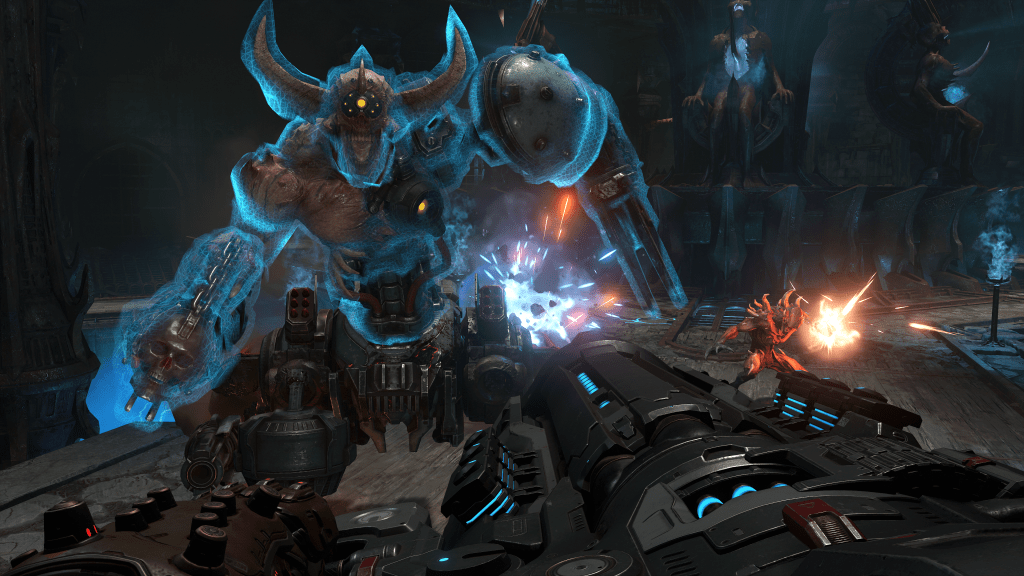
Most boomer shooters rely on heavily arcade-y visual cues to communicate information quickly to the player. The recent Doom games opted to highlight low health enemies with flashing neon blues and oranges so the player can immediately recognise when to push forward and execute a glory kill. But for a game committed to maintaining a specific visual aesthetic, one entirely in black and white, visual clarity requires some creativity.
In many ways, Fumi found solutions that adhere the games overarching visual motif. Shooter staples like red barrels now bob up and down, animated to visually pop against an otherwise static background. They bear symbols easily recognisable as explosive. Despite the absence of red, I still found myself shooting barrels on sight, watching them erupt into a fiery explosion or causing enemies to freeze over. Ammunition and health pickups follow the same formula; broomstick ammo is the most recognisable distillation of a shotgun shell making it easily distinguishable from the drum magazine of the game’s tommy gun.
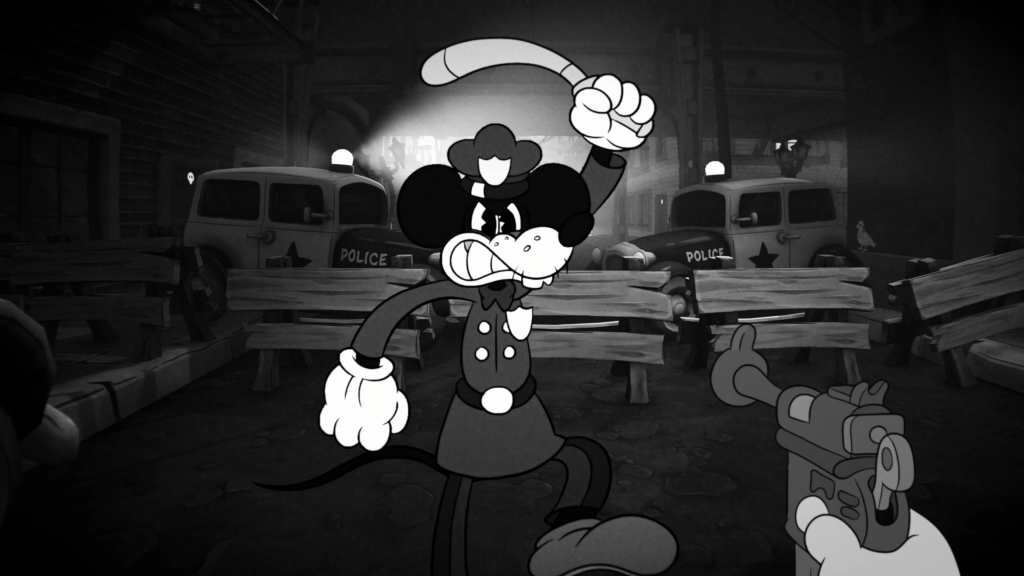
Fumi clearly put a lot of work into making a visually constrained game readable by modern shooter standards but, unfortunately, that creativity wasn’t applied to gameplay. While visually distinct, enemies behave as they would in almost any other shooter, either perched atop a ledge peppering bullets from above or charging you head on. Enemy size is a fairly accurate indicator of their health, but other enemy variations do little to spice things up – even shielded enemies are vulnerable to the same kick to stun and riddle with bullets combo.
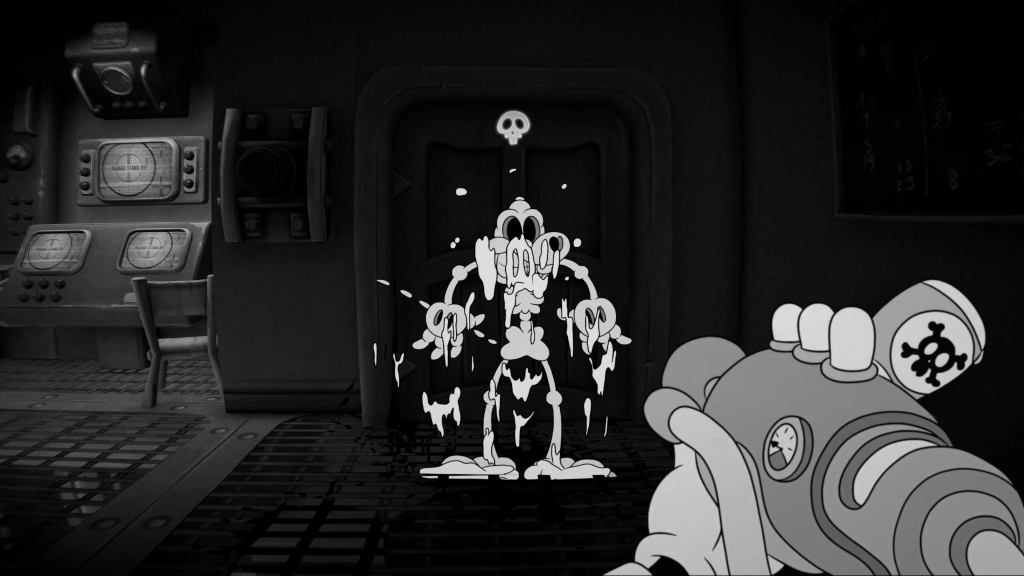
The unique properties and potential of rubber hose animation are barely explored. I picture enemies that can stretch or bend around bullets, forcing you to engage in hand-to-hand combat, or overweight enemies whose fat causes any explosive to bounce back like a trampoline, turning your own arsenal against you. Lock picking is a glimpse into the game’s potential, leveraging the dynamic animation style and games context to create a unique and entertaining take on a typically boring mechanic. I just wish a fraction of that ingenuity had been applied to the rest of the gameplay.
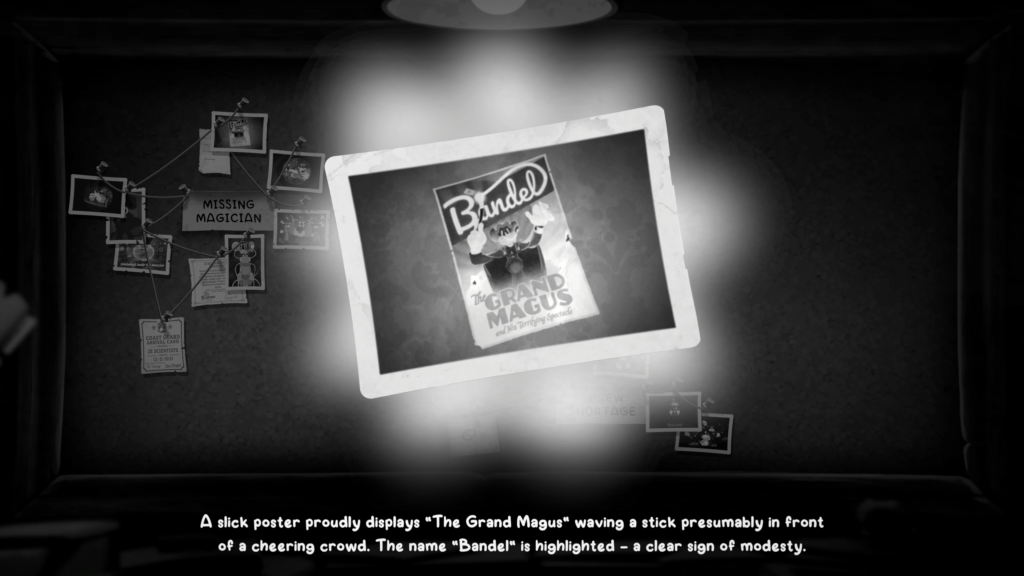
That same issue extends to the story, although the mystery behind Mouse P.I.’s noir detective story is intriguing, you don’t partake in a whole lot of detecting. The evidence board requires no deductive reasoning on your part as you are spoon fed the information. Any leads instantaneously solve themselves and, while this keeps the story moving at a reasonable pace, it left me wanting more from a story drenched in intrigue and potential.
That’s not to say that every shooter needs to innovate. Boomer shooters as a genre live or die by a consistent mechanical foundation, which makes them easy to pick up and fun to master. That DNA certainly runs through Mouse: P.I. For hire but, unlike other shooters, Mouse P.I.s magnetic field is entirely generated by its commitment to an art style. And when that commitment is only surface level, it’s difficult for the game to attract players and keep them there.

