

In the wake of Epic Games’ March 24, 2026 layoffs, the industry’s obsession with eternal games looks less like ambition and more like a slow-moving disaster. Epic said it was laying off more than 1,000 employees, with reporting putting that at roughly 20% of the workforce.
For years, the live-service pitch has sold a vision of the future of gaming: not finite pieces of art, but never-ending experiences that evolve and grow alongside their players. And for businesses, it has offered promises of a constant revenue stream. But that promise has always been fuelled by delusion.
All video games make demands on players’ time. As smaller indie titles increasingly dominate award shows, the question is how long audiences will continue to tolerate the live-service model when so many smaller titles show far more respect for their players.
The industry has become borderline obsessed with permanence: the fantasy that every game can become Fortnite, that every studio can latch onto a compounding stream of engagement, retention, and monetisation. But that fantasy is built on a refusal to accept the limits of attention, money, time, and human labour.
Epics latest cuts were tied, by the company’s own account, to a downturn in Fortnite engagement that began in 2025. CEO Tim Sweeney said Epic was “spending significantly more than we’re making” and needed major cuts, alongside more than $500 million in other savings.
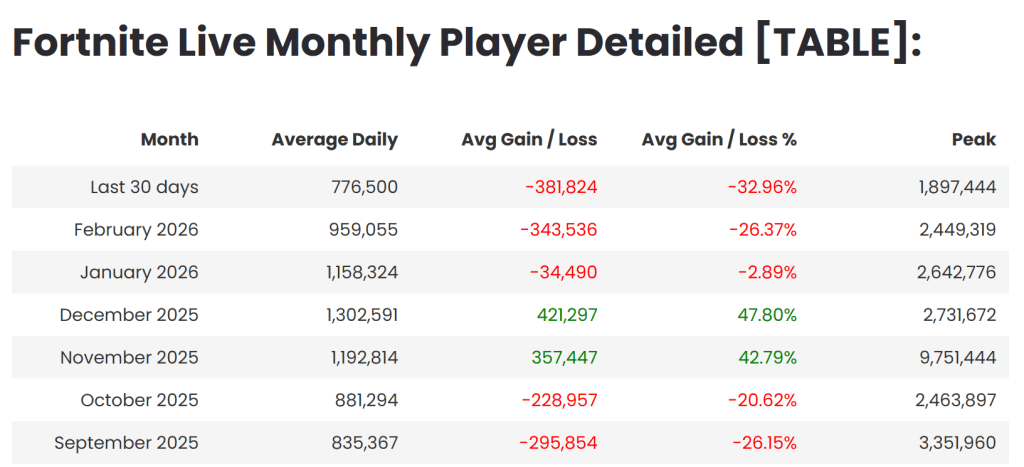
And yet the picture is more complicated than a simple story of collapse. Recent market tracking indicates Fortnite still remained one of the most played games in February 2026, while Circana data publicly shared by Mat Piscatella showed Fortnite leading monthly active users across PlayStation and Xbox in the US – even as average player time has fallen year over year. Despite thinning engagement, Fortnite remains an enormous game.
Executives tend to describe redundancies in abstract terms: dips in engagement, slower growth, shifting markets. But abstraction is a luxury afforded to the people whose jobs are secure. For developers, artists, QA staff, and other support workers, these layoffs are not abstract. They are lost rent, terminated visas, disruptions to healthcare. These are people trying to build a life in an industry that has grown colder and less stable year after year.
The most damning fact about the live-service industry is not that games fail. Games fail all the time. The damning thing is the scale of human wreckage produced by an industry fixated on impossible expectations and the constant chase for more money. More and more live-service games are produced each year, despite the graveyard already being full. And when those ambitions collapse, it is the workers who absorb the impact.
The alternative path is clear. In fact, it is beginning to materialise right in front of us. More self-contained, curated experiences that are allowed to succeed without the devastating toll corporate greed places on the creative process. Games that release, are played, and end gracefully are often the ones taking home awards or crashing various store fronts on launch day. Not every studio needs to build a second job for its audience. Some of the most meaningful games land the way they do because they are finite. They understand that an experience can be lasting without having to last forever.
The video game industry would do well to remember that. Chasing the live-service dream has not made games feel more alive, whatever the people in charge might claim. It has made them, and the business around them, more volatile. And worst of all, it is disposing of the people who make them: talented, hard-working individuals who pour every iota of passion and drive into making something beautiful to share with the world.
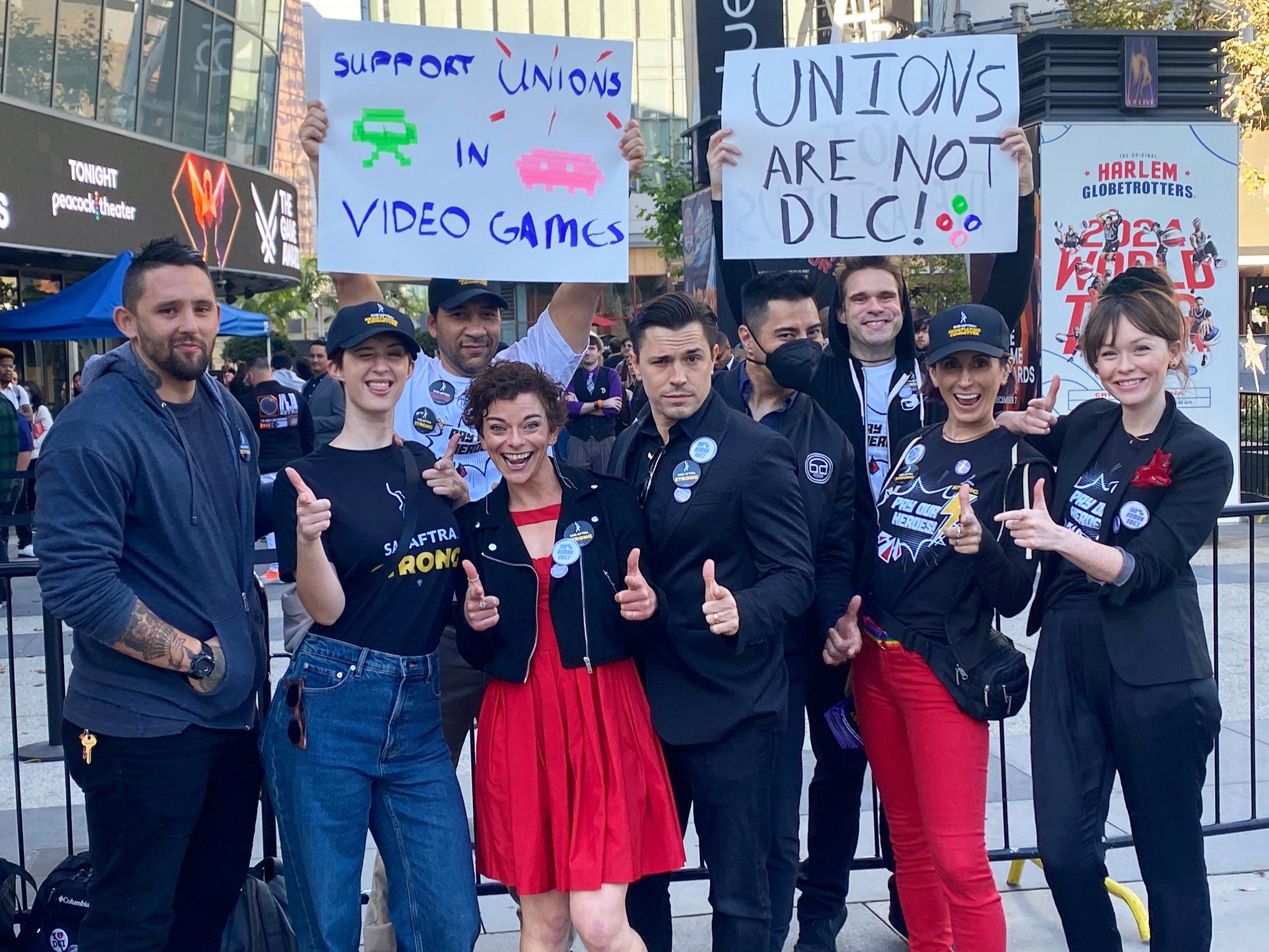
If there is one takeaway from the ever-growing waves of industry layoffs that has defined the last five years, it is this: games do not need to live forever, but the people who make them do need to live. And right now, they are trying to survive in an industry that treats them like collateral damage.
 Gaming Acuity
Leave a comment