1
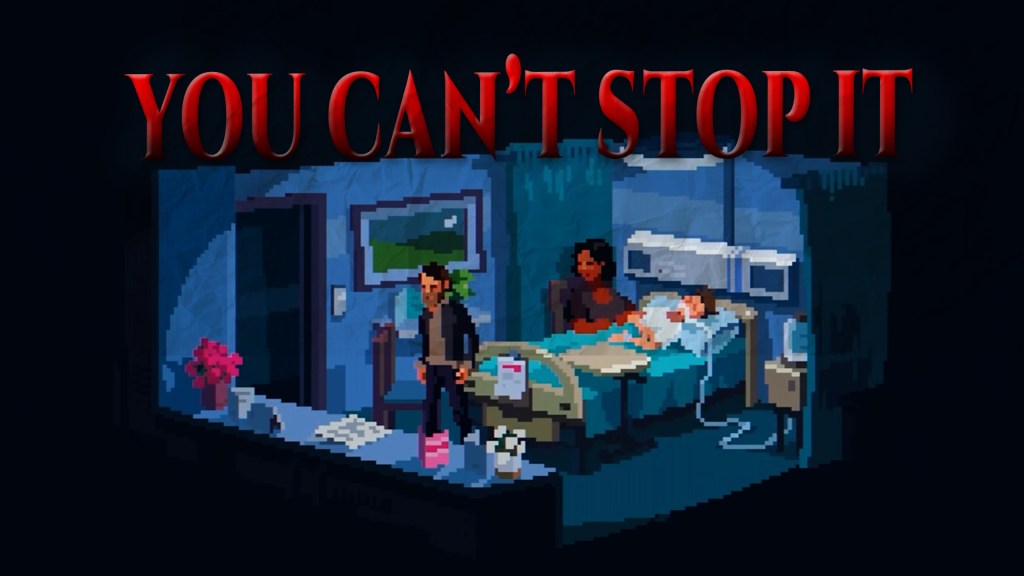
The Drifter was the scariest game I played last year. I don’t mean that as hyperbole – rolling credits left me with a creeping sense of unease that refuses to let go.
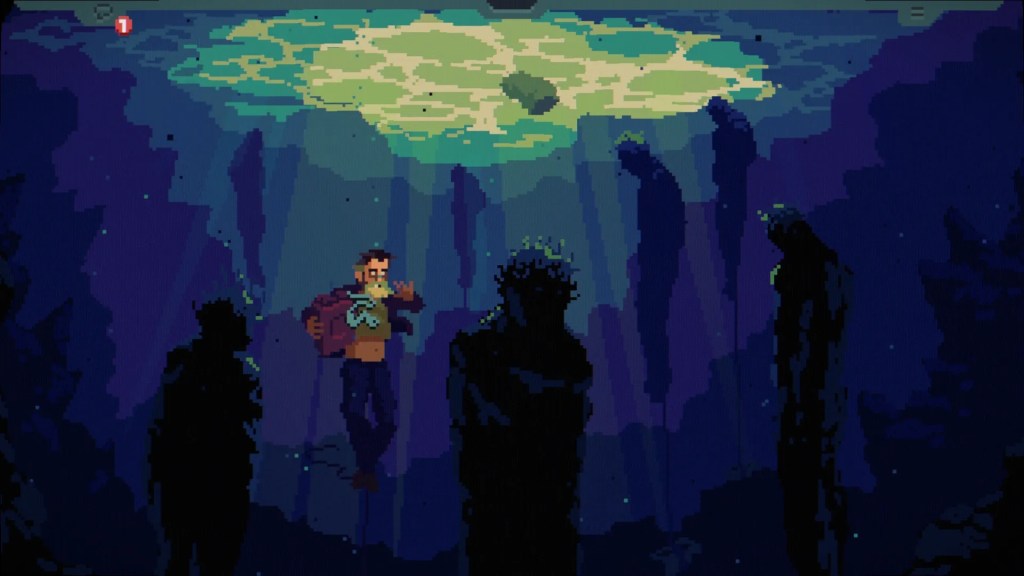
The game is about one man, Mick Carter, who – within the first hour – has a bag put over his head, weights tied to his ankles and is thrown to the bottom of a freezing lake. It’s here that he discovers his ability to relive the moments before his death, over and over, until he uses the newfound knowledge to survive.
See The Drifter – like many other time loop games – is a game about knowledge. Knowing exactly what will happen. When it will happen. And being able to manipulate events accordingly. If you knew what was coming – every knock on your the door, every conversation, every kindness, every embarrasment , and every tiny mistake – you could change your behaviour and alter the outcome. Tip the balance in your favour. All your anxieties would disappear. Everything would be calm.
That is Mick’s Goal – to use his control over time to save himself. To survive in a world which chewed him up and spat him out more times than he can count. But the reality that unfolds is something far scarier.
Going into The Drifter, I expected a puzzle game about escaping death. But by the time the credits rolled, I realised The Drifter wasn’t interested in whether Mick could survive. It was asking a much stranger question: What if knowing the future doesn’t make you powerful…
What if it pushes everyone away.
2
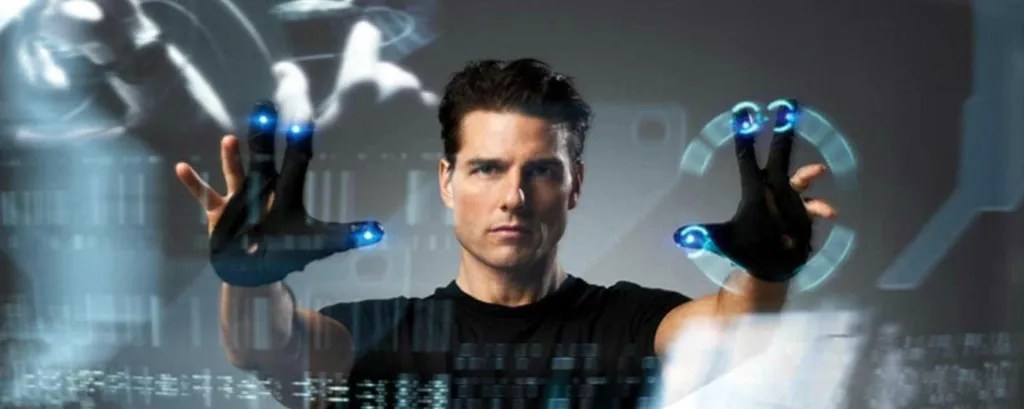
The 2002 film the Minority Report follows John Anderton as he leads a specialised police unit that uses prophetic technology to apprehend murderers before they commit the crime. Outside of the blatant ethical implications of this system – there is a far more disturbing reality unfolding.
The predictions derive from the ‘precogs’. They look human – they have arms, legs, a torso, they have a face complete with eyes, nose, mouth, and teeth. They’re named like us. But they are not treated as human.
They are suspended in a sterile pool. Wired into machinery designed to extract knowledge while assuring compliance. They are never fully awake, but never allowed to sleep – sedated, motionless, and powerless.
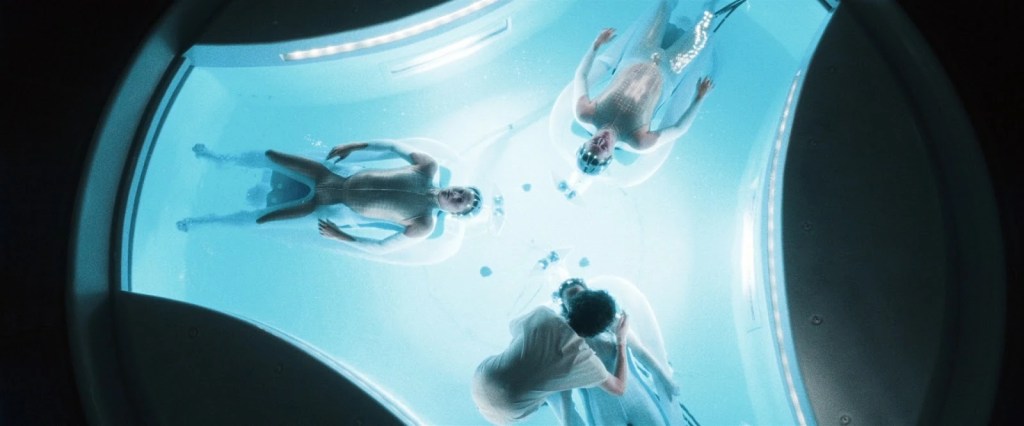
The precogs possess an extraordinary ability far beyond any human – a power that can prevent death itself. Like Mick Carter – their knowledge and abilities are presented as the next stage of human evolution. An evolution that simultaneously strips them of their freedom. They are reduced to nothing more that tools. Devices maintained so others can wield their power. Their foresight protects everyone expect themselves, and only when those in control deem it necessary.
In the original short story of the same name, the metaphor is far harsher:
“Their physical needs were taking care of automatically… Vegetable-like, they muttered and dozed and existed … the three gibbering, fumbling creatures with their enlarged heads and wasted bodies.”
There is no care here. There is no dignity. These are not people – they are instruments. Their humanity is irrelevant and only their visions matter.
Mick Carter’s ability is only triggered through extreme neurological distress. The kind you can only experience through violent lethal trauma. A reality Dr Gideon Roth is all too happy to subject him to on repeat – satiating his desire for power and control. He does not care for the lives he destroys. Even his own wife’s.
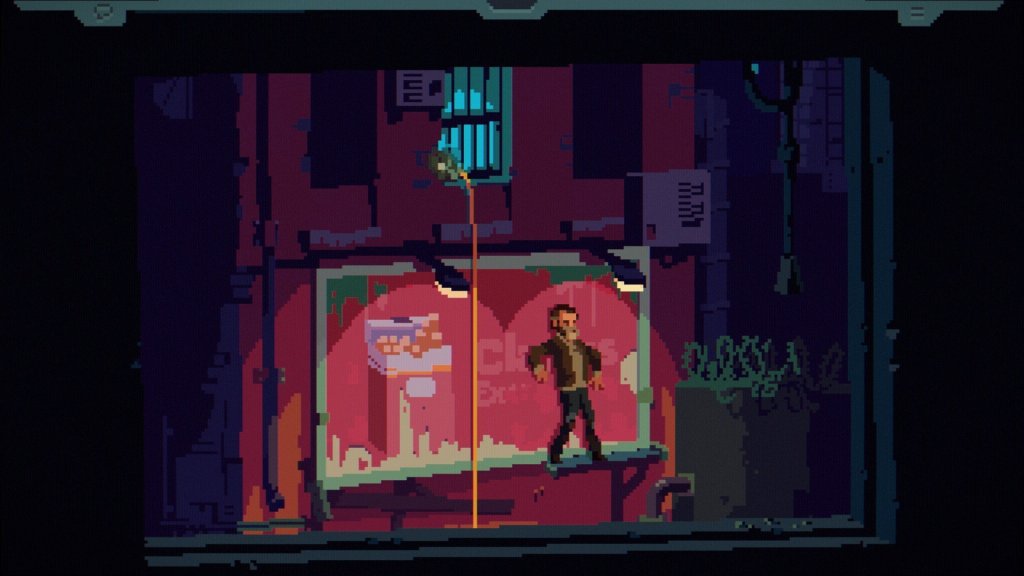
An ability like this could bring wealth, safety, even salvation. But it would never truly belong to the those who possesses it. If someone like you or I, could see the future, relive it, manipulate it – that knowledge would be too valuable to remain private. Someone wealthier, more powerful, and more corrupt would inevitably attempt to control it.
Foresight would not make you powerful; it would make you useful. That is, if people believe you to begin with.
3
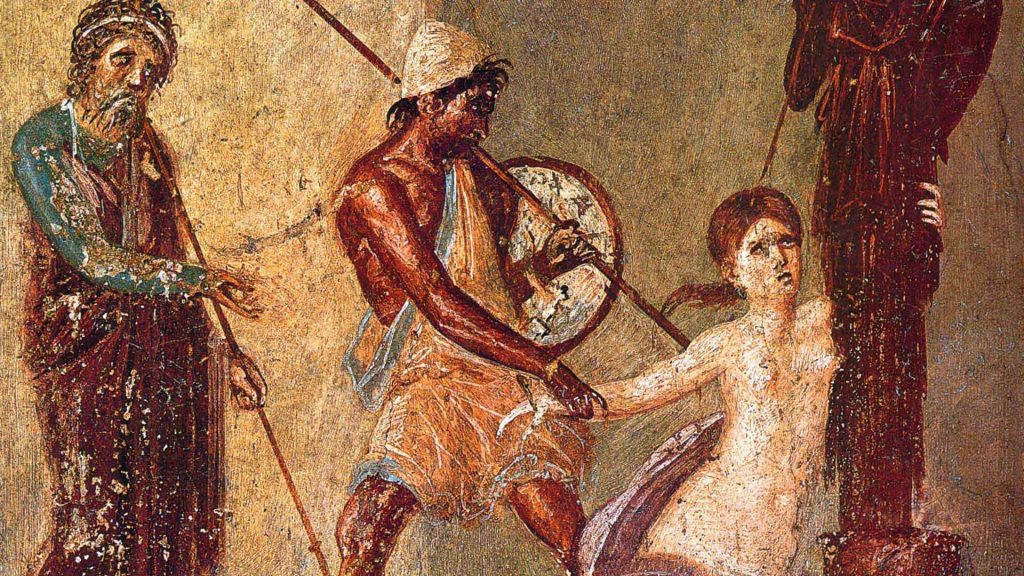
The story of Cassandra in Greek myth is a tragic one. Cassandra was granted extraordinary prophetic ability by the god Apollo. Enamoured with her, he offered her the power to see the future with perfect accuracy in exchange for her affection. Cassandra accepted the gift but rejected Apollo’s advances. Unable to revoke the power, Apollo twisted it into a curse: Cassandra would always speak the truth. No one would ever believe her.
Her knowledge became her torment. Prophecies ignored unfolded into disaster. The warnings of war and the fall of Troy at the hands of a Trojan horse were ignored — all of her power useless. Unable to prevent her own assassination.
Troy did not fall because the future was obscured — the events were presented to Cassandra as absolute truth. Troy fell because the warnings were dismissed.
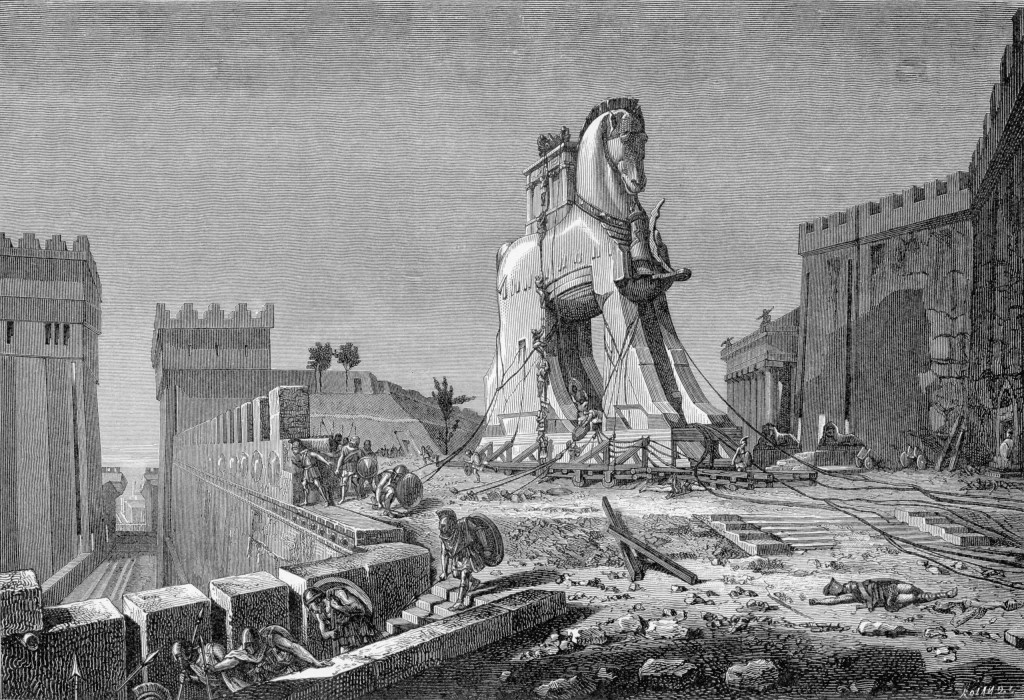
The myth makes one thing very clear: knowledge is useless without authority.
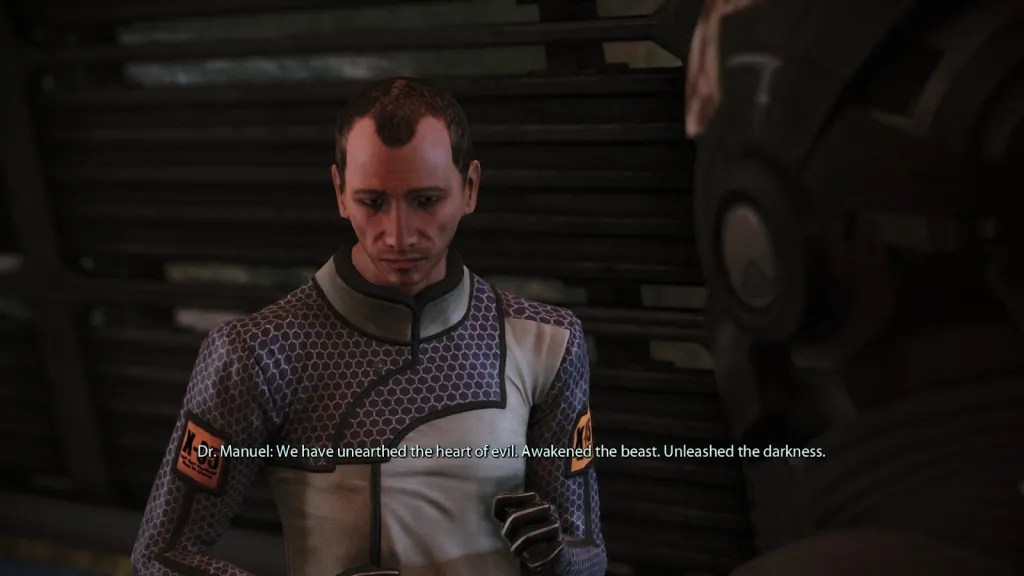
In the opening of Mass Effect, you encounter an apparently insane scientist, Dr. Manuel. His frantic ramblings accurately describe the events of the next 100 plus hours of gameplay. He speaks of humanities end. A prophet leading the heralds of destruction. No escape. No hope. His warnings, however, are brushed aside, his intelligence mistaken for madness.
After all, “Genius and madness are two sides of the same coin.”
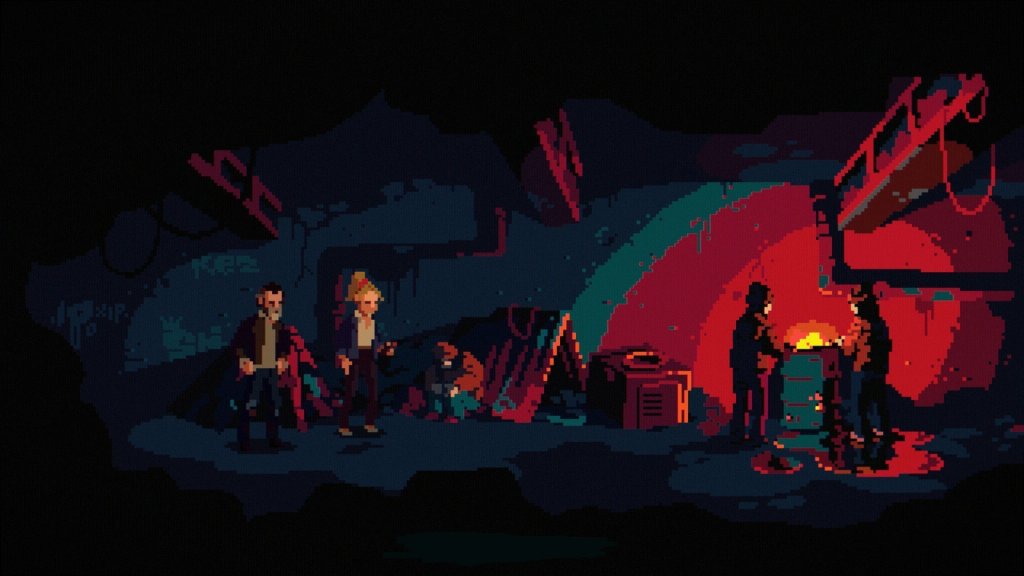
In The Drifter, homeless disappearances are barely investigated. A single reporter interviews their dwindling numbers, while so many meet a violent, isolated end. They describe shadowy figures with burning eyes abducting people in the night. Their accounts are dismissed again as ramblings while authorities pour resources into catching a serial killer.
The victims were subjects of Dr. Roth’s experimentation, through which he created grotesque abominations — creatures sprouting writhing tendrils engineered for killing. Their warnings were accurate, but their social status meant they fell on deaf ears.
Like Cassandra, like Dr. Manuel, and like so many others, these people lack authority, they lack status and the people around them are searching for an excuse to ignore them.
Without authority, the truth sounds indistinguishable from madness.
What good is it to know the future if no one believes you?
What good is certainty if no one acts upon it?
4
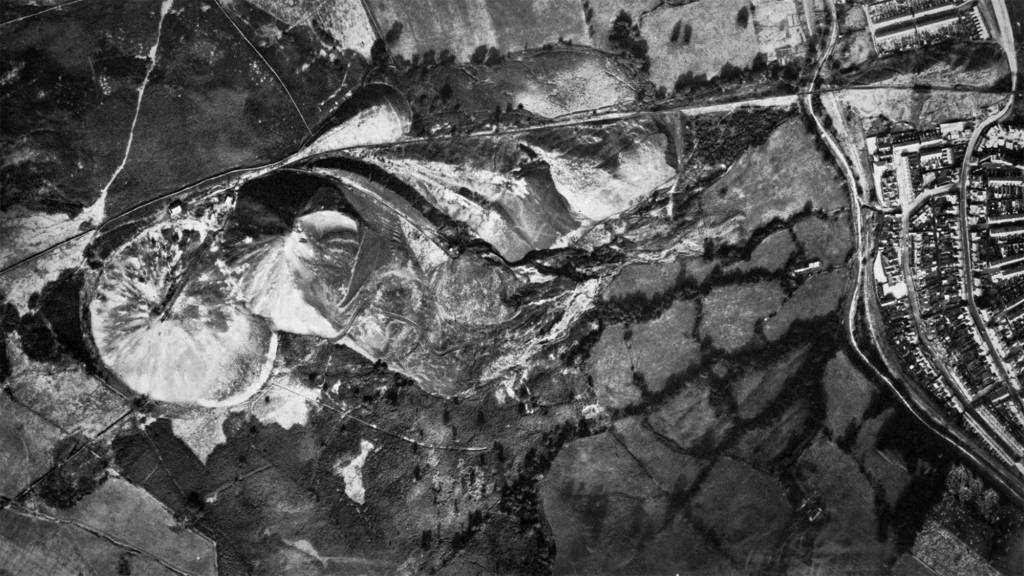
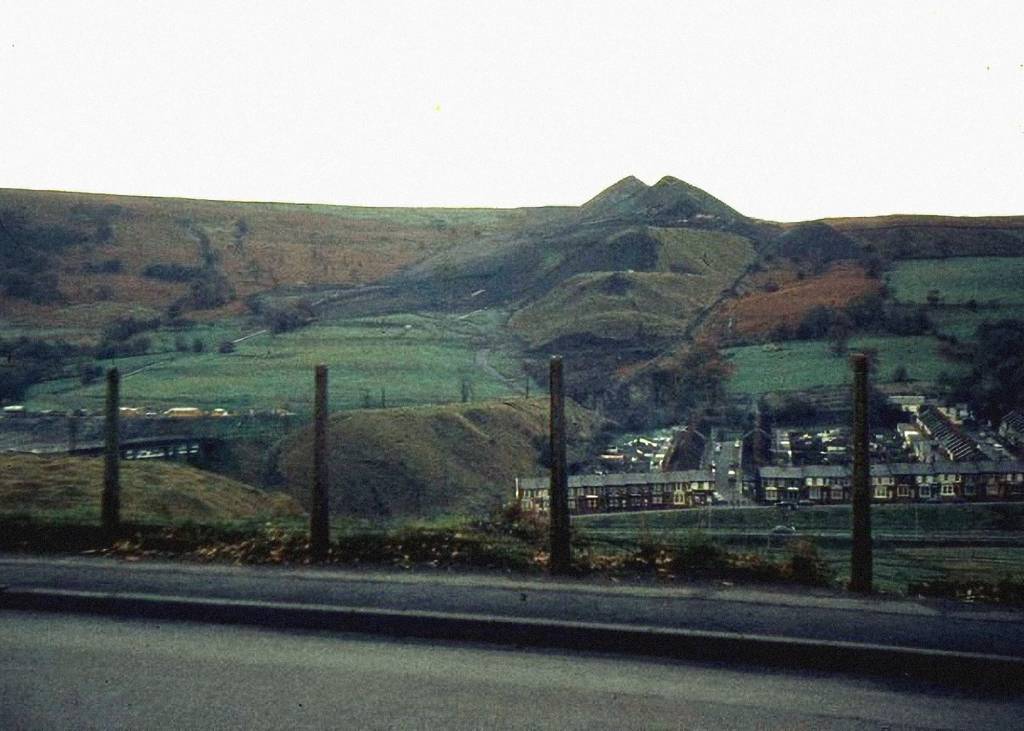
On 21 October 1966, labourers working on the hillside above Aberfan — a small village in South Wales — noticed the coal tip had started to sink.
For years, waste from the nearby coal mine had been deposited on the slopes of Merthyr Mountain. As each site grew too large, it was abandoned and another took its place. Tip number seven began in 1958, and over the next five years it became so large it almost collapsed five times. By 1966 it towered nearly 111 feet above the village below.
At the foot of the mountain lay Moy Road, a narrow street of residential buildings and two schools. The junior school opened at 9:00 on the 21st, as it did every morning. And at 9:15, the tip collapsed. A wave of slurry, rock, and debris rushed down the mountainside burying the school and much of Moy Road.
Throughout the day, bodies were recovered and laid in the local chapel. They were labelled for identification:
144 people died — and 116 were children.
The night before the disaster, a young girl named Eryl Mai Jones told her mother about a dream.
“Let me tell you about my dream last night.”
To which her mother replied:
“Darling, I have no time. Tell me later.”
But Eryl Mai insisted:
“I dreamt I went to school and there was no school there. Something black had come down all over it.”
The next day, Eryl Mai was buried in that school.
It is difficult to hear the story of Aberfan without searching for meaning — a sign that something could have been done, if only someone had listened.
The stories we tell ourselves — of time loops and premonitions — teach us to think this way. They teach us to hope tragedy is preventable. That the future is not random. And if events are not random, perhaps they can be controlled.
But Aberfan offers an alternate possibility that is infinitely more terrifying.
We are not in control.
5
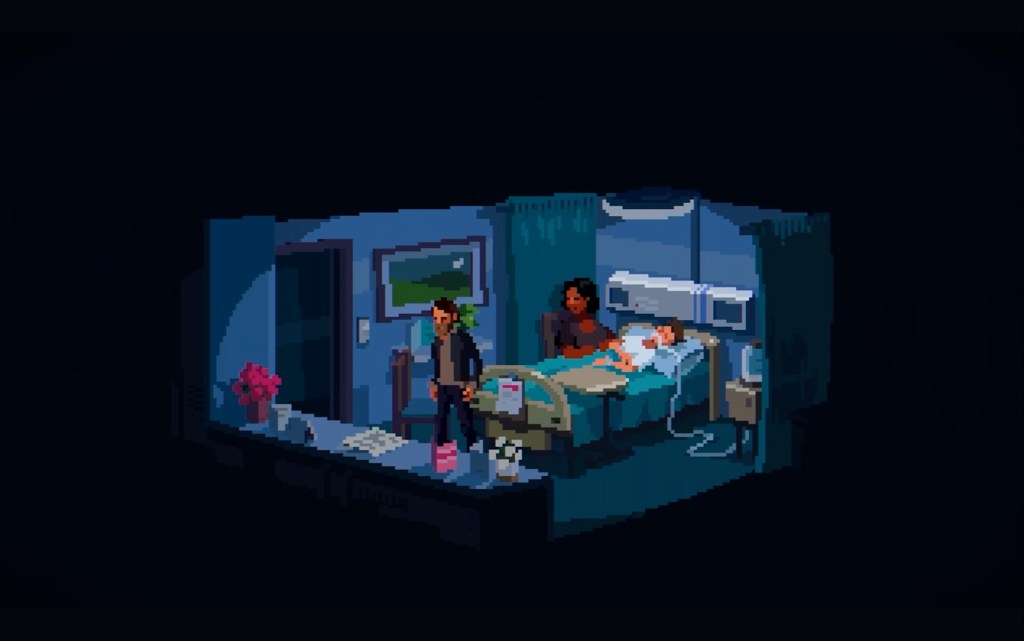
Throughout The Drifter, there were a few questions that I couldn’t let go. Why is Mick burdened with this power? And how does he intend to use it?
During the final act, Mick’s motivations become clear. His son, Alec, died of Batten disease, a rare and fatal neurodegenerative disorder that fills cells with toxic waste. Most suffers barely live to their teens. If it can be called life. They experience a slow decline in motor function, seizures, and symptoms of dementia.
It’s a death sentence. A guaranteed that life will end early.
Mick knew there was no cure — that time would eventually take his son — and he was driven mad by his inability to save him.
He was using his power not to cure his son, but to go back far enough that Alec would never suffer at all — to use the knowledge of his future to undo it. But he could not change what happened. Instead, he relived the same days, the same loss, the same grief over and over again, trying to solve an unsolvable puzzle.
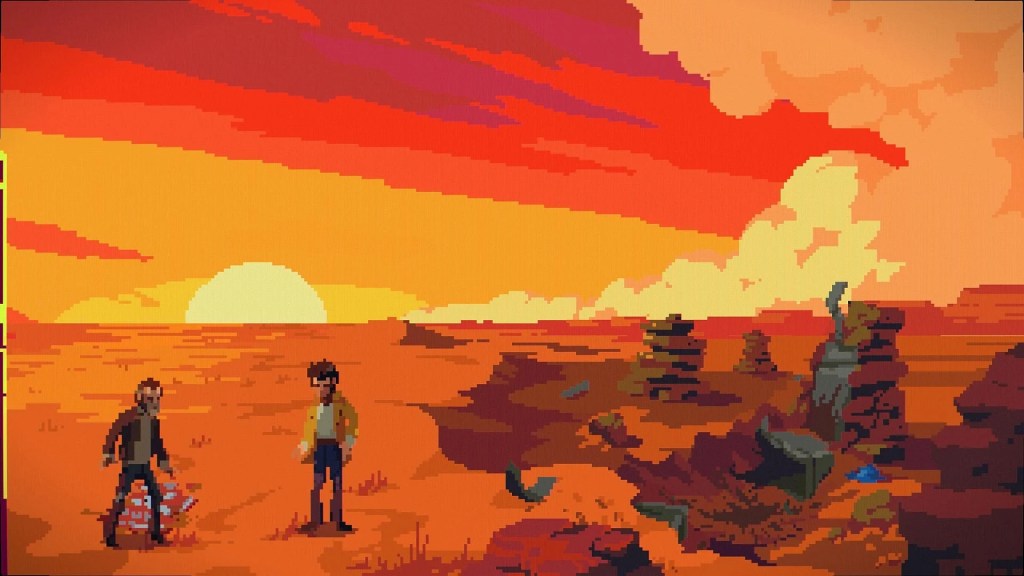
And so, the only way forward was not control, but acceptance — living with uncertainty and the hope that life will get better, that tomorrow will be kinder than today.
We imagine certainty would comfort us, that knowing our future would quiet our minds and allow us to live without anxiety or fear. But uncertainty is not something we merely suffer through.
Perhaps uncertainty is something we need — something necessary to keep us moving forward.
Video Format:
 Gaming Acuity

Leave a comment