
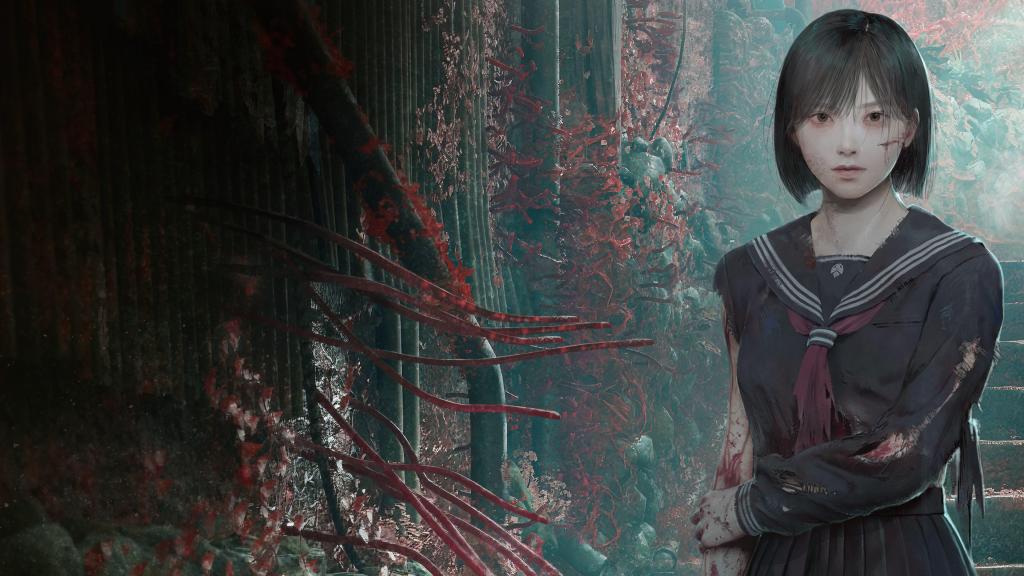
Silent Hill f abandons the familiar American backdrop for the 1960s Japanese fictional town of Ebisugaoka. The corrugated iron rooftops and narrow, winding streets form the stage for otherworldly entities intent on tearing you limb from limb. It’s a thematically perfect setting for the Silent Hill premise – a place where post-war cultural changes clash with long standing religious and societal traditions. Crucially, the focus on these traditions and Japanese folklore breathes new life into the series’ trademark “Otherworld” – Silent Hill’s distortion of reality that manifests character’s deepest fears and insecurities.
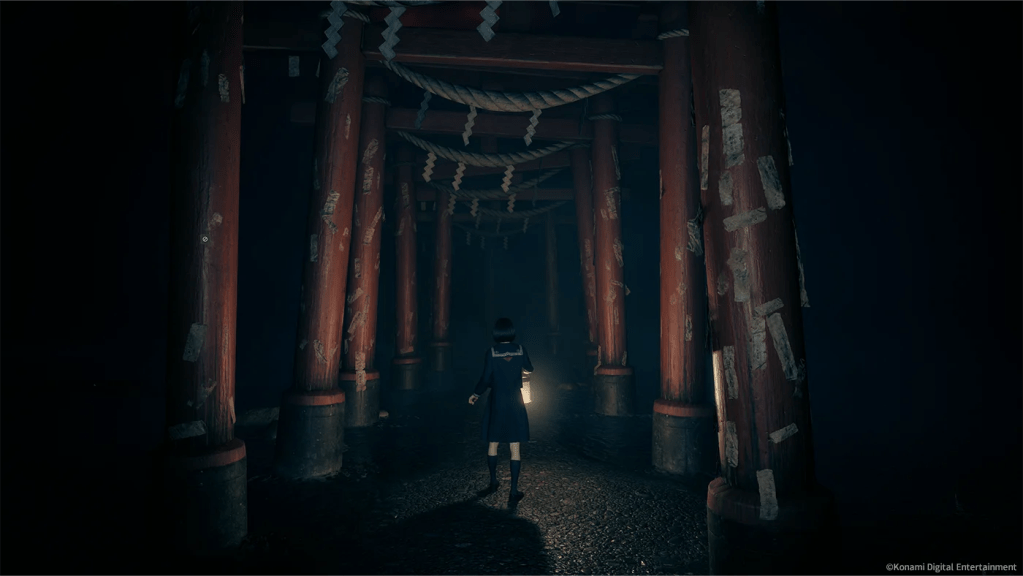
Following a violent confrontation with her alcoholic father, Shimizu Hinako, seeks reprieve among her peers. But her respite is just that, brief. A dense, unnatural fog begins to swallow the village, blooming with grotesque pustules and eerily beautiful flowers. Within it moves something spectral, an ethereal presence that ensures any living thing it touches meets a swift, brutal end.
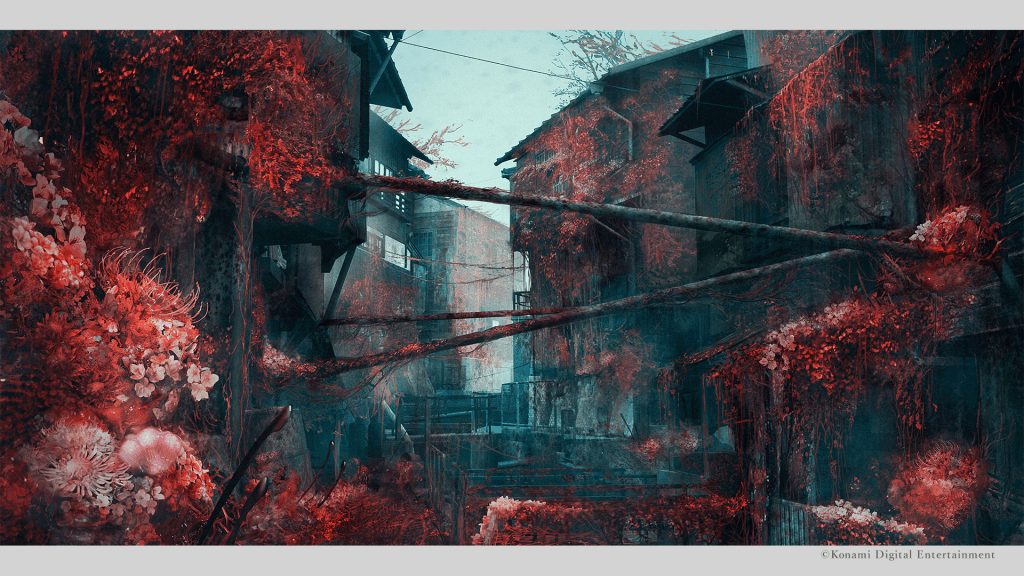
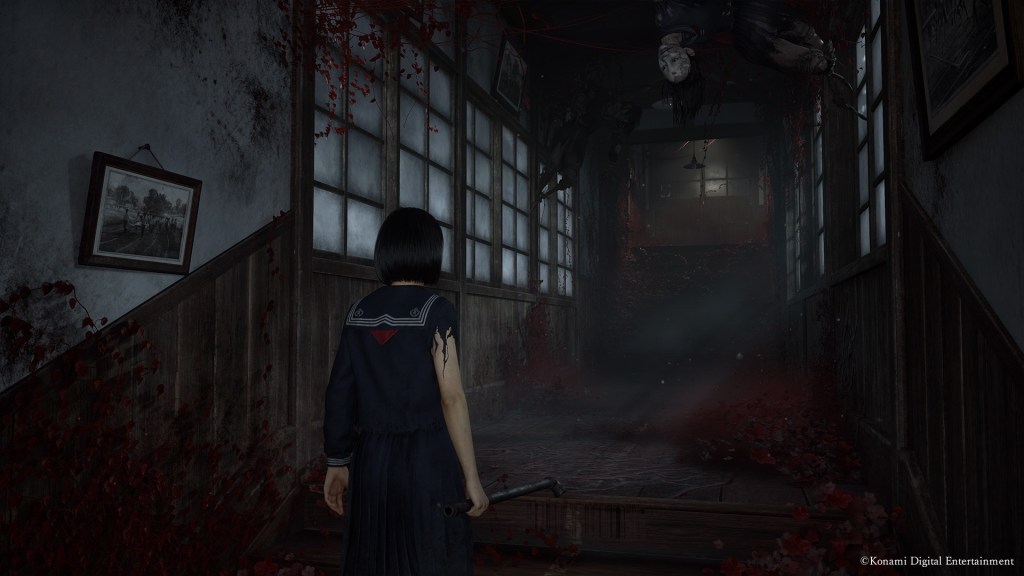
Every frame of Silent Hill f captures a haunting balance between beauty and terror. Vibrant crimson flowers weave through the streets, wrapping around buildings and engulfing abandoned vehicles, their colour seeping into the dense woodland surrounding Ebisugaoka. The bloom sprouts from tumorous growths that pulse and writhe, tendrils reaching for anything that strays too close.
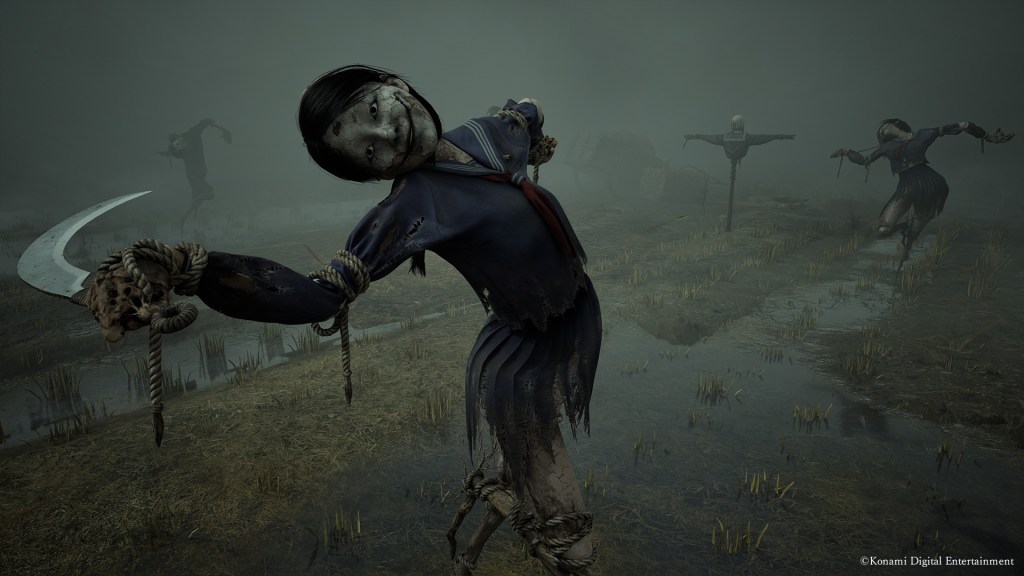
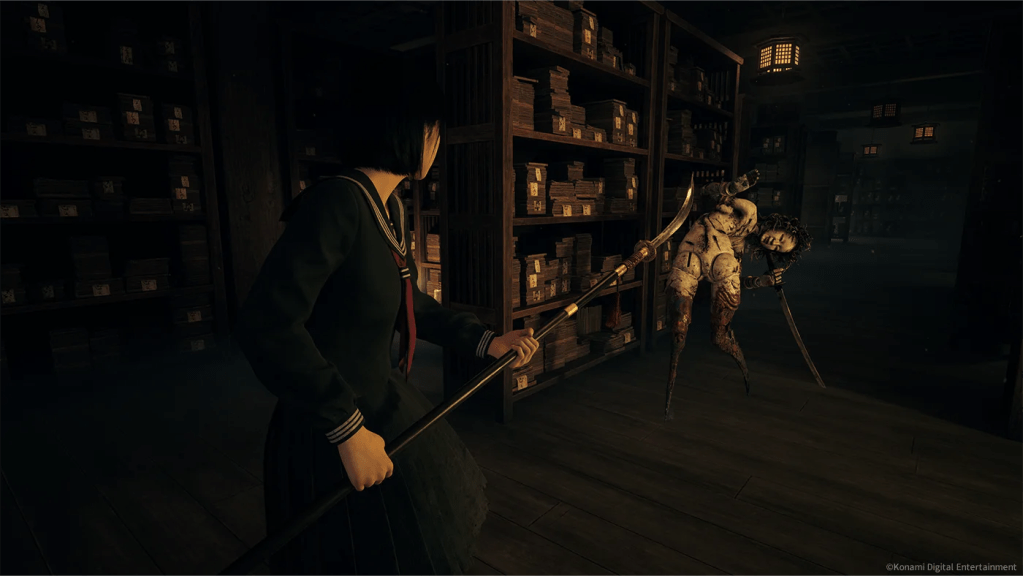
The enemies in Silent Hill f are equally striking. The Ara-Abare, twisted amalgamations of flesh and flora adding another grotesque layer to the visual tapestry. Past the visuals, each entity is a manifestation of Hinako’s fears. The Ayakakashi are adorned in the same uniform as Hinako herself, moving only when unobserved – they embody pressure of academic success and the cruelty of her friends and peers as they discuss Hinako behind her back. And the Kashimashi – by far the most prevalent adversary – are a grotesque mosaic of limbs haphazardly stitched together to take the shape of a naked woman.
Yet, for all their unsettling design, there’s little variation in how each creature behaves – or how you confront them. Each possessed a predictable set of attack patterns and counter windows, and thanks to Hinako’s surprisingly nimble movement, combat rarely feels dangerous and errs on the monotonous side. Often, I found myself sidestepping optional combat encounters, instead drawn towards the next narrative revelation.
It’s a shame the combat landed this way. Survival horror has long evolved compelling ways to weaponise vulnerability to create an engaging combat sandbox. Resident Evil 4 put you in control of Leon S Kennedy, his combat prowess balanced with a tightly tuned ammo economy and relentless foes. Other games, like Amnesia, centre around fragile and overwhelmed protagonists, forcing every step to balance risk vs reward at the fear of being gutted where you stand. Silent Hill f sits awkwardly between the two. For a schoolgirl, Hinako is remarkably adept at dodging and weaving between enemy attacks, swinging weighty sledgehammers and axes with relative ease and perfectly timed dodges replenish stamina, further increasing her manoeuvrability. Combined with the predicable enemy AI, it undercuts much of the fear the game works so carefully to construct. Thankfully, the terror survives through the precise use of gut-wrenching body horror, its suffocating atmosphere, and a constant sense of dread that lurks around every corner.
Beneath its underwhelming combat, Silent Hill f, leverages its setting to tell a mesmerising story exploring the cultural and religious shifts present during 1960s post-war Japan – a time when deep rooted tradition was uprooted with the sudden insurgence of western ideologies. Before the war, law granted men absolute authority within the family, relegating women to obedience. Though these structures were formally abolished, long standing social expectations endured. Woman were encouraged to pursue careers but after marriage would be pushed to leave work, raise children, and return quietly to that prior domestic subservience.
The Otherworld becomes the perfect vessel to manifest these socio-political pressures. The fear that marriage and duty demand a kind of self-erasure, requiring one to sacrifice parts of themselves both physically and mentally. In Ebisugaoka, Hinako is isolated from her friends and family, forced to survive along as the world as she knows it decays around her. Each jump between real and surreal feels deliberate, each fear realised by violent, ritualistic scenes that externalise Hinako’s oppression and loss of identity. The remnants of these rituals seep into the real world, leaving visible scars on her appearance as the story unfolds.
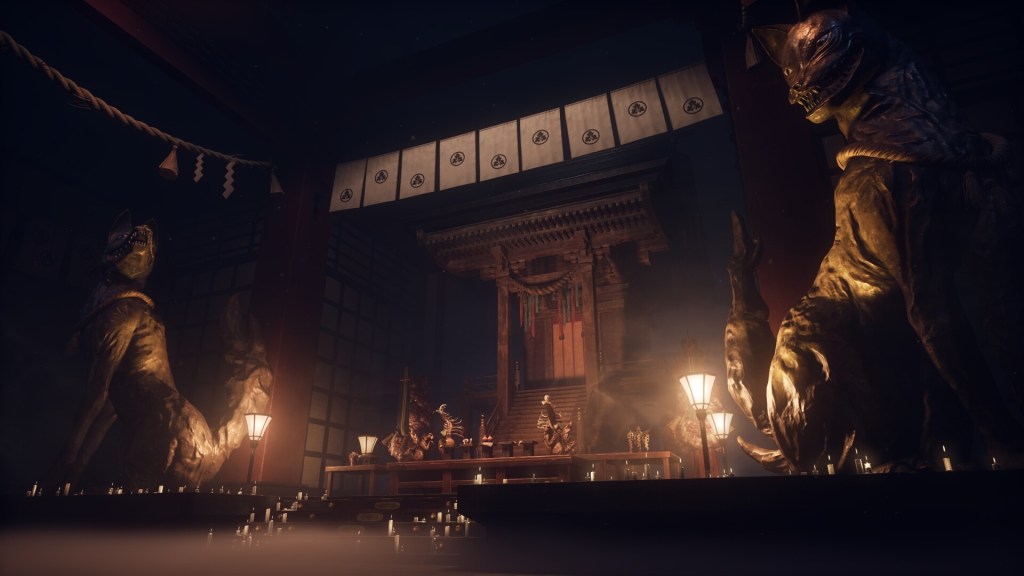
The puzzles scattered through these spaces share the same thematic coherence, but they fail to engage on a mechanical level Often either too straightforward or frustratingly obtuse. Most can be solved through persistence and trial and error rather than understanding while others require deciphering very small details which can be easily missed with even the slightest lapse in attention. For this reason, the puzzles scarcity feels intentional, as if developers NeoBards knew this wasn’t the games strength, choosing instead to immerse players in the richness of its world and weight of its ideas. A well calculated move from a studio which is relatively new to the survival horror scene.
For those who want to push the story further, completion isn’t the end. There’s a New Game + mode that invites players to explore multiple endings, each adding new layers of depth to an already complex narrative.
Silent Hill f’s change in setting may alienate some fans with its substantial shift in setting, but deep down it is still undeniably Silent Hill. Its horrors bloom from the pressure to conform during a time of personal, cultural, and societal change. In many ways, Silent Hill f feels like the series’ natural evolution, retaining the franchise’s familiar psychological dread while reframing It through a distinct cultural lens. It’s a game unafraid to let its creativity run wild, and one that leaves me genuinely excited for where the series might go next.
 Gaming Acuity
Leave a comment