
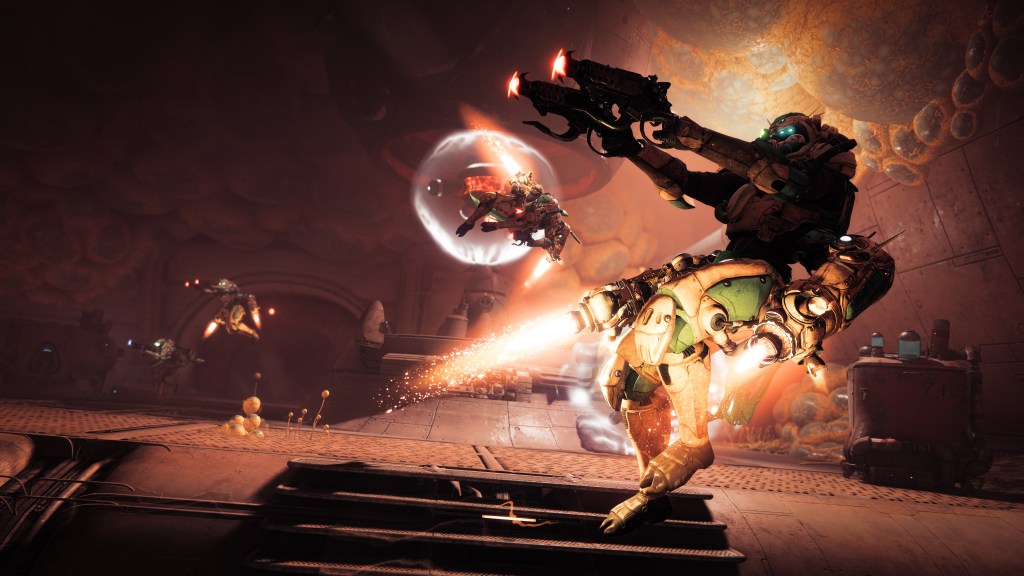
I can still remember my excitement, on the 9th of September 2014, when I queued up to log in to Destiny for the very first time. I sat impatiently, listening to the iconic loading screen music. Looking back now, the state of Destiny 1 at launch was dire, but the prospect of its sci-fi fantasy universe and the pedigree of Bungie’s previous games blinded me to that fact – so much so that I sometimes struggled to see the game in an objective light, even years later.
Last year Bungie concluded their 10-year “Light and Dark” saga with The Final Shape. The highly acclaimed expansion brought the story to a satisfying conclusion, hitting its climax with the 19-hour world’s first clear of the Salvations Edge raid, and its 12-person activity in which we finally felled the Witness. So, the question on everyone’s mind was: Where will Bungie take Destiny next – and how can they keep players now that the story has reached its logical conclusion?
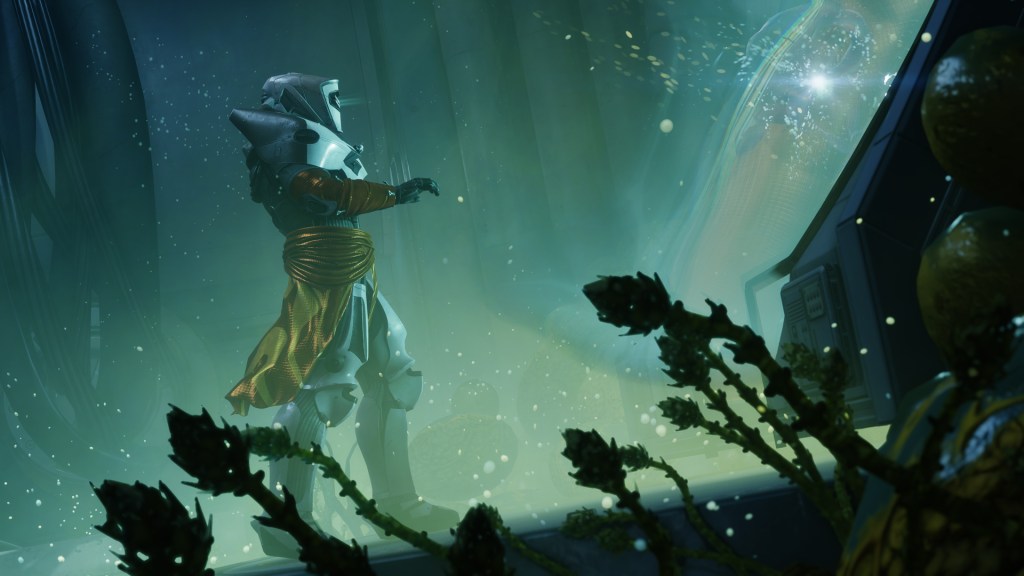
Unfortunately, Bungie failed to instil confidence in the lead up to the Edge of Fate. Reports of internal turmoil, poor staff morale and the devastating rounds of layoffs (cutting approximately 17% of the workforce) emerged, despite the Final Shape’s success. Bungie also announced they’d be moving away from their previous expansion release cadence in favour of two smaller annual releases.
This shift stated to alienate their players at a time when they desperately needed to win back community sentiment – and start the new saga with a BANG!
When Edge of Fate Launched and I waited to sign in once again, it failed to recreate the excitement I felt almost 11 years ago. And despite some noteworthy merits within the campaign’s narrative – and the excellent Desert Perpetual Raid – the latest expansion only solidified my fears for the franchise’s future, rather than re invigorating my love for it.

The Edge of Fate released on 15th July with a 14-mission long campaign. The narrative is emotionally rich, exploring the history of Ikora – one of the franchise’s most iconic characters – and providing insight into the collapse, a central historical moment of Destiny lore.
The expansion opens with an invitation of sorts. The nine – a relatively unexplored group of extradimensional beings – have crashed an old Chicago Ravenswood train in the outskirts of the last city. Ikora and our guardian are tasked with investigating the strange disturbance, leading them to the farthest reaches of the solar system and the newest destination, Kepler.
What follows is an intriguing exploration of fate, what governs our actions, and whether those actions are truly our own. Its emotional moments are punctuated by spectacular performances, especially from Brian Villobos. Lodis characterisations is a breath of fresh air, his naivety and confusion help deliver exposition without it feeling like an info dump.
The story follows two branching paths: the vex path features the returning Mia Sundaresh (aka the Conductor from Episode: Echoes), and the fallen path introduces a new Kell known as the Archon. These branching paths help to vary mission design, but the story suffers from the same problem that plagued some recent assassin’s creed titles: each pathway fails to progress the overall narrative in a meaningful way. The result? A mid section that feels bloated and unnecessary, and only at the climax – when the paths merge – does the story finally begin to ramp up.

Destination & Abilities
Kepler though visually appealing with its neon lights and striking architecture, is a major step back in destination design. Navigation is frustrating due to labyrinthine hallways and constant back tracking – compounded by the implementation of new destination abilities.
Each campaign mission revolves around on (of several) of the three new destination abilities:
- Matterspark (which takes its Metroidvania inspirations a little too literally)
- The Relocator Cannon, and
- Mattermorph.
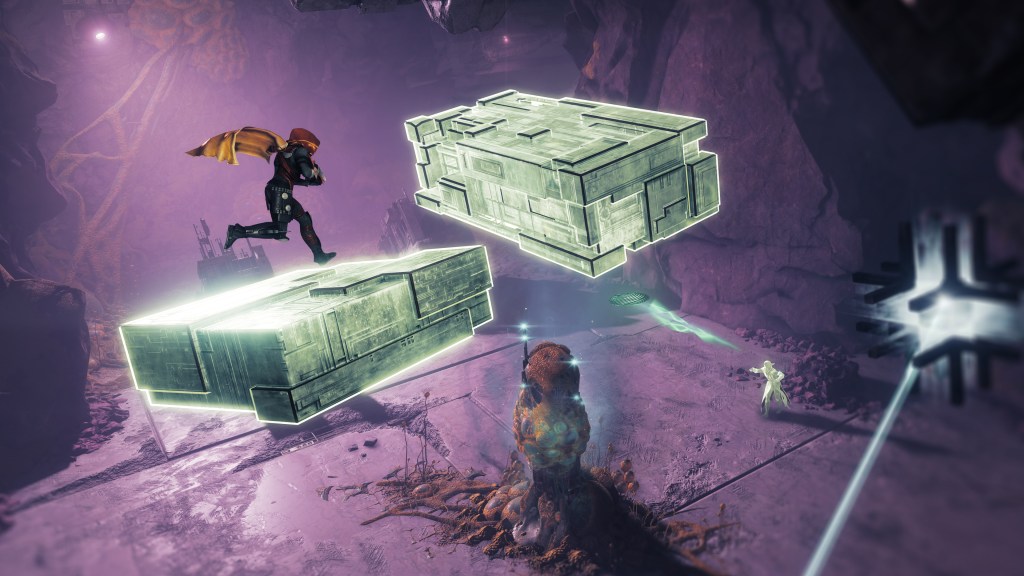
These are used for puzzle encounters akin to simplified dungeons – though the difficulty is toned down significantly. Unfortunately, many of the puzzles feel lacklustre or even tedious, due to poor implementation. Matterspark, in particularly, is egregious – causing violent camera jerking when activated and dealing pitiful damage at higher difficulties.
The result is a middling campaign experience, despite the emotionally compelling storytelling near the end.
After the campaign, Destiny 2 quickly falls back into its old pitfalls – except now the new levelling and portal systems make those issues even more obvious than before.
Live service games often tout “quality of life” changes – updates meant to streamline the experience and reduce friction. Edge of Fate includes many of these: an overhaul to stat and levelling systems, and the introduction of the portal.
In theory, this is great. The notoriously poor onboarding experience for new players could benefit from more guided progression. But in practice, it rips out the game’s soul. Instead of locating missions in the established game world, players now click a lifeless menu that drops them into a limited set of repeatable missions – again, and again, and again.
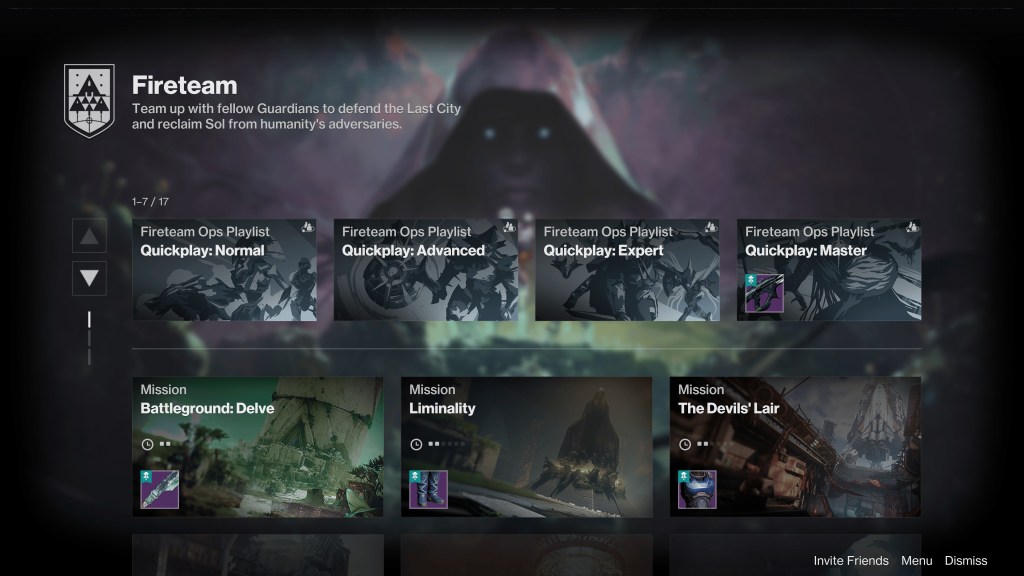
Within the first week, players flocked to the encore exotic mission because it was the most efficient way to level. Bungie responded by removing it, which accomplished nothing – players simply moved to the next most efficient farm.
To make matters worse, these changes have rendered Bungie’s endgame content obsolete. Raids – which were once the pinnacle of Destiny’s content – are completely disconnected from the portal system. Even the newest raid, Desert perpetual, offered dramatically lower- tier rewards than a lost sector. Even the contest completion (the hardest challenge Destiny 2 has likely ever seen) only rewarded measly tier-one gear.
In its current state, the game has lost its challenging endgame and meaningful grind. For a live service MMO like Destiny 2, that’s a damning reality.
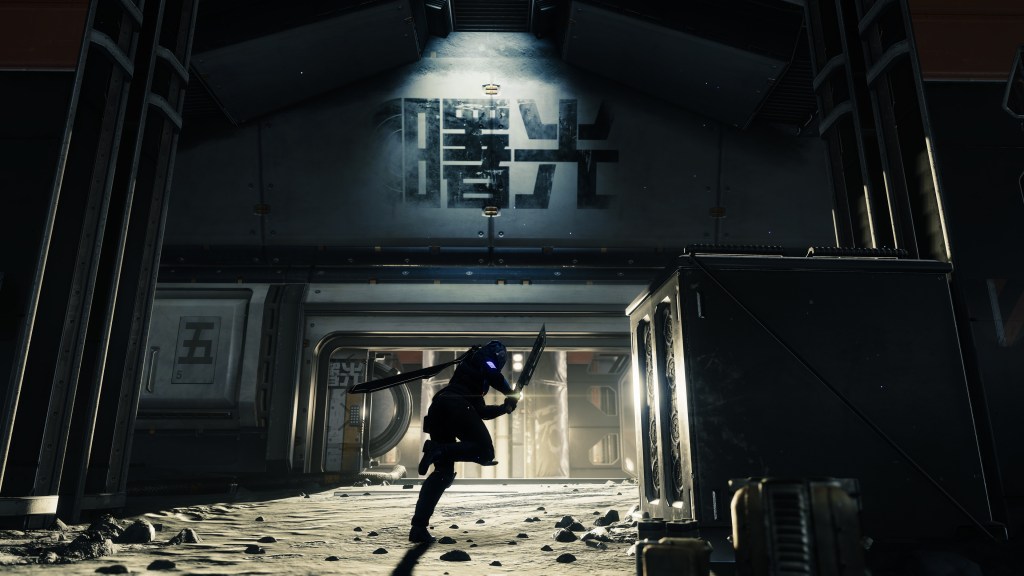
The narrative Bungie has set in motion with the Edge of Fate is full of potential – and that’s very exciting. But much like vanilla Destiny 1, great potential is marred by systemic issues:
- Monotonous levelling
- Repetitive and unchallenging endgame
- Excellent but unrewarding raiding
- And smaller-scope expansions on the horizon
But this time, the rose-tinted glasses are off.
Reflecting on the state of Destiny 1’s launch and Destiny 2 over the last week, I’ve realised something: Bungie seem lost. They’ve removed the incentive to play much of their most prestigious content. And worst of all, they’ve turned levelling into a tedious chore rather than an aspirational grind.
Bungie may have plans for the future. Upcoming updates and expansions might address these issues. But the community has been through this before. They’ve weathered buggy launches with sparce content offerings, but this time? This time might be the last straw. Afterall, how many more times can players be expected to forgive Bungie’s missteps – especially knowing their resources are now split between Destiny and the upcoming Marathon?
The players who have kept this game alive for over a decade may finally be driven away – once and for all.
 Gaming Acuity
Leave a comment