

What was the last video game that frustrated you? From Soft games tend to frustrate me, although this is by design and likely the reason why I love them so much. The difficulty feels tuned just enough that its frustrating to perish in combat, but victory is always just within grasp. It creates a powerful desire to push forward and through.
Games like Octodad and Getting Over It frustrated me to no end. This is largely again by design. Games like this have deliberately unintuitive controls that punish built up muscle memory. This design, although strange, allows for mastery of the mechanics which skyrocket enjoyment of the game.
And then there is Blue Prince. A game that frustrated me to no end. Like the aforementioned games, this frustration was born out of a desire to progress deeper into and learn more about the mysterious mansion. More about the lore. More about puzzle interactions. And learn more about what is in that goddamn room. It’s masterful. Poetic. And a triumph in puzzle and game design. I would go as far to say its one of my favourite games ever made.
Yet one of the central selling points of its game, ends up birthing a different kind of frustration. The unwelcome kind. I don’t think this will detract from the experience for most. At the end of the day, it’s a very mild gripe. But I found it plagued the game at just the time where I didn’t want it too.
It’s ending.
The Foundations.
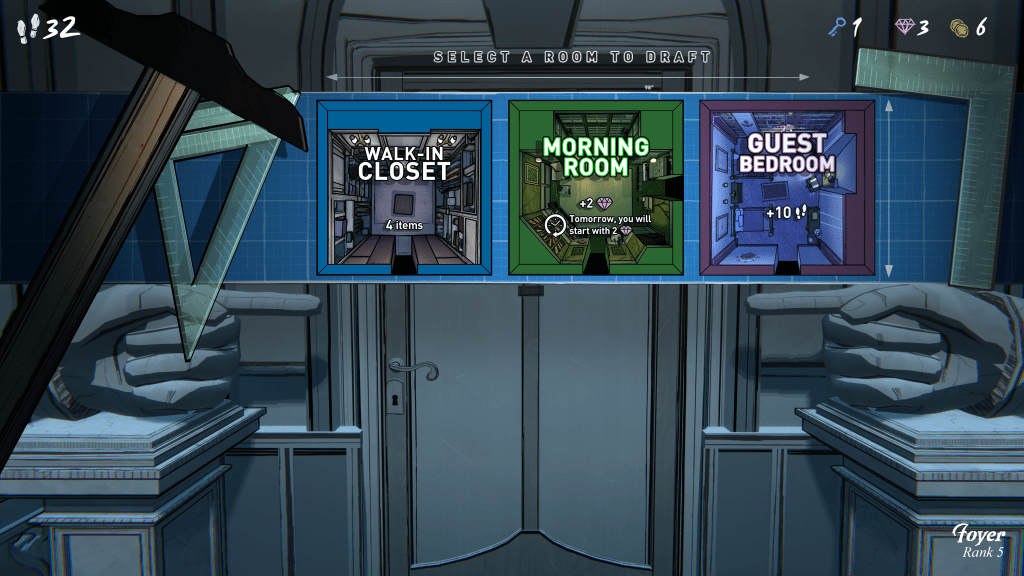
Blue Prince at its heart is a puzzle game. But what sets it apart from its counterparts is its clever inclusion of the roguelike structure. As the Heir to the seemingly elusive Hubert S Sinclair, you have been propositioned to solve the mystery behind Mt. Holly. A 45-room mansion that, as far as you are aware, contains an additional 46th, hidden room. The roguelike elements are introduced in the form of an ever-shifting house, moving through it you need to draft a selection of three rooms which are picked randomly from the vast blueprint list. Each room housing some form of item, currency, puzzle, punishment, or secret yet to be discovered. Roguelikes excel in creating variety and replay ability, although the replay ability component is not Blue Prince’s focal point. Instead, it uses the ever-changing structure, warping corridors, and its clever secrets to present multiple threads for you to tug at and weave between at your own pace.
This is what makes the game so compelling. The sheer quantity of side puzzles and mysteries means no two peoples playthroughs will ever pan out in the same way. I felt it almost a necessity to scribble into a notebook as I explored Mt. Holly, while family wondered if I was slowly losing my mind, scrawling illegible notes and whispering, “holy shit, that’s it”, to myself in the corner of the room. Maybe I was, some of the threads I pulled at led me nowhere. But where so many led to revelations, I couldn’t help but note everything I saw, so I could obsess over it for hours on the off chance it led to something delightful.
Any game that has this power over me, quickly leapfrogs onto my list of certified bangers (which coincidentally is the folder name on my steam page), joining the likes of Outer Wilds, Lorelei and the Laser Eyes, and Slay the Spire. But there is a nagging issue with Blue Prince. One born of that central mechanic, which was so integral to my enjoyment, I don’t think there is any opportunity to rectify it.
The Rogue Element.
When I was younger, I would save all money I could. When I finally saved enough, I would take that money down to GAME (or whatever physical game seller was open), and stand for an age trying to select what world I wanted to inhabit until I could eventually repeat the process. Did I want to dive into the sci fi narrative depth of Mass Effect 2 or get lost in the vast expanses and freedom of Skyrim. Both options I desperately wanted to explore, but at the time would have the impossible task of picking just one.
Blue Prince made me feel the exact same way. Although its structure helped to narrow down the options by only allowing four of five threads to be explorable on any given run. Good thing too as choice paralysis is a real thing, and I could easily have found myself collapsing into it without being coerced down one of the countless paths. It’s a wonderful feeling when the game is at this stage, so much ahead of you to explore, but that cannot last. It eventually starts to sour.
As I would role credits on the likes of Mass Effect 2, Skyrim, Red Dead Redemption, and Dark Souls, the path to my next adventure would skew a tad blurry, forced to dive into an experience that did not pique my interest in the same way, or sit idly waiting for my next game to release.
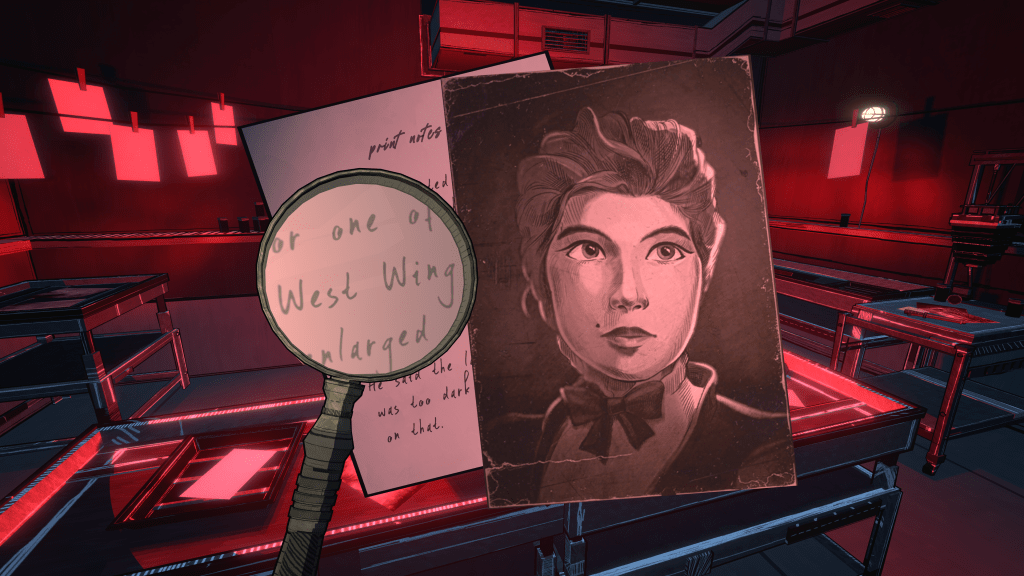
And at its heart, this is the issue with Blue Prince. The more mysterious narrative threads I solved, the fewer compelling options there were. And in turn, the more at the mercy of the roguelike structure my experience was. Three or four runs pass by before the one small cog in the overarching machine would reveal itself, most of that time I was sitting, waiting, hoping. The resistance afforded by the game is meant to push further exploration. Investigation into facets of the game yet unexplored. But as the pool of mysteries become thinner and thinner, I found myself reliving my experience from 10-15 years ago, some mysteries did not pique my interest to the same degrees as others, and I found myself playing something out of necessity, rather than wanting to dive headfirst into the mystery. Or I reset, try my luck on the slot machine that was Mt. Holly, in hopes I would find that one missing piece. The right combination of blueprints, currency, and items that would rip the game wide open.
A Flawed Masterpiece.
Nothing is ever perfect. And this is only truer for creative works. Something of beauty will always have its flaws. 1984 will be criticised for being an overly simple portrayal of totalitarianism. Someone will point out that the stars in Van Gogh’s Starry Night aren’t in the right place. And people will moan that Harvey Dent made the transformation into Two Face to quickly in The Dark Knight.
Although I can pick apart the structure of Blue Prince, say that it elicited significant frustration throughout its run time, and complain about the tiniest of details. All that feels pedantic, and going over the games systems with the provided magnifying glass is always going to reveal little cracks. But these are only surface level blemishes. They result in a frustration, but like many games before it, this frustration was short lived, and regularly interrupted with moments of pure, unadulterated joy. I expect the implementation of its rogue like systems will be somewhat divisive, and although I found they vexed me at pivotal moments in the game. That does not stop Blue Prince from joining my pantheon of absolute all timers, and I will forever be stuck comparing future puzzles to its weaving, every changing hallways.
 Gaming Acuity
Leave a comment