
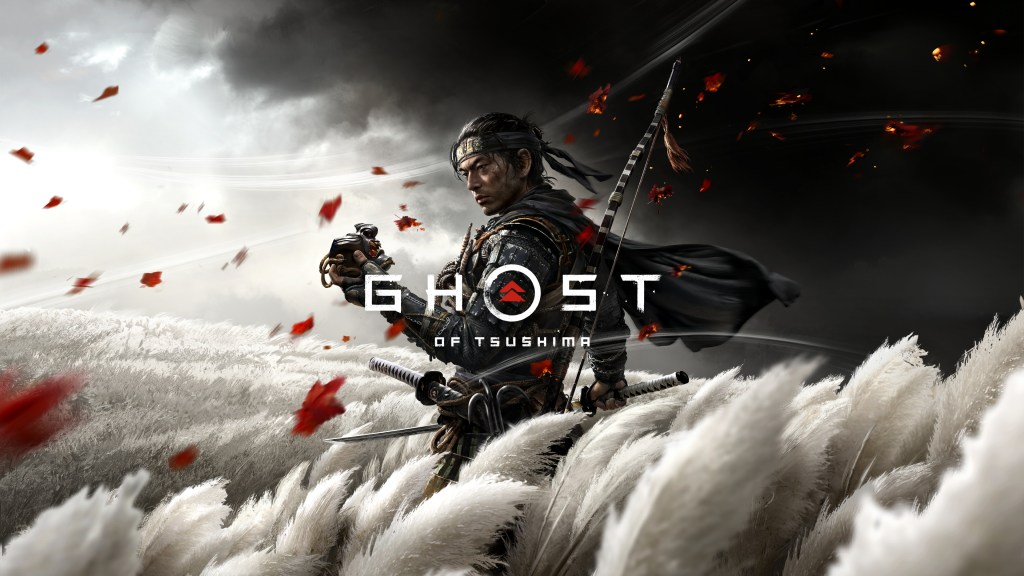
Introduction:
I have received countless recommendations to play Ghost of Tsushima over the 5 years since its initial release. To a degree I feel embarrassed that it has taken this long for me to finally bite the bullet. Particularly with my interest in Japanese culture and history. Now that the credits have rolled, I can see why its garnered its reputation of excellence. There are certainly some flaws, and some aspects of the experience that a little outdated or frustrating, but it presents a compelling narrative, with well written characters that delves into complex themes of belonging and duty.
As an open world game, Ghost of Tsushima does a lot right, and manages to avoid a lot of the pitfalls of modern-day open world action games. The open world design and navigation is second to none. The way the art direction helps to sherpa you through the open world to various objectives is a welcome change to the typical map marker driven experience, even if this is still present to a degree. The narrative was superbly written and performed and does not overstay its welcome feeling like a tight and succinct package despite its reasonable run time. Side content, although unnecessary, also ends up being a highlight enticing more exploration of the gorgeous open world.
Combat for me was a mixed bag. I really enjoyed the general flow of combat, the stance changes and gadgetry at Jin’s disposal make for an engaging combat loop. With an immense feeling of satisfaction as you begin to master the combat, particularly on the harder difficulty. It really manages to encapsulate what it means to be a samurai. Despite this, group fights can sometimes feel awkward, and I am not a fan of the range combat systems in place, particularly at the start of the game.
The games excellent pacing, world building and art design all left me with a feeling of regret that I had not followed up on previous recommendations and started playing three or four years ago.
Story:
I have recently been reading the Shortest History of Japan by Lesley Downer. The book concisely recounts the Mongol invasion and how the sheer size of Kublai Khan’s Mongol and Korean army would overwhelm the samurai despite their attempted seven-week defence. It is a testament to the skill of the samurai that when faced with an unstoppable force how they managed to remain steadfast for such an extended time.

There is nothing that quite encapsulates that history like Ghost of Tsushima. Particularly in its opening moments.
The spectacle of this Mongol invasion rendition is something to behold and gives you a sense of scale as the camera pans to reveal the might of their fleet. For Jin and the dwindling samurai, this confrontation ends in catastrophe and in dramatic fashion.
Left wounded and alone, Jin is saved and nursed back to health by a stranger. He embarks on a journey to save his uncle and rid Tsushima of the Mongol forces. The opening sequence sets up the story perfectly as well as introducing the vulnerability of Jin’s character. This characterisation is only built upon as Jin battles with what it means to be a Samurai and that the pathway necessary to bring victory can in turn bring dishonour to his family’s legacy. As a samurai stealth is antithetical to the honour brought about by death in combat. The decisions to engage in a ‘less honourable combat’ has significant repercussions on Jin himself and his relationship with his family and friends. Progressing through the first act sees you amassing followers and leading them to liberate Castle Kaneda and free Jin’s uncle. Jin gains insight of the invasion and its impact on the land and its inhabitants. Companions teach combat skills through their quests, namely archery and stealth. Continuing you will come to unlock the grapple hook for greater traversal opportunities and the Ghost Stance which rewards mastery of the combat systems.
My 35 hour long play through felt fine tuned to perfection. Although not a completionist play through it felt like I explored a vast majority what the game had on offer. It was filled with interesting stories, characters, and side content. Although the quality of the side content did vary and after one or two haiku’s cutscenes I essentially wrote them off for the rest of the game. Yet the majority of what I interacted with only furthered my appreciation of the main narrative. Interacting with the breathtaking open world and its inhabitants gave the story a sense of purpose. I wanted to develop my combat ability. I wanted to push back the Mongols. Not only to further Jin’s story but because my exploring increased my own personal investment in the land and its population.
It could have been easy given the open world game structure for Sucker Punch to have created another 100+ hour slog, filled to the brim with unnecessary drivel to pad out the run time. Instead, they have masterfully crafted an experience that never overstays its welcome.
Combat:
Combat acts a way in which Jin internalises his struggles with what it means to be a samurai, and how he can bring honour to his family. After a substantial defeat both with the Samurai during the opening, and in one-on-one combat with the Khan, Jin is encouraged to approach certain combat encounters as a thief. Given in his state in the opening of the game, he is incapable of taking the Mongols head on. The stealth sandbox from start to finish is very simple, but it is effective. Assassinations, wind chimes to distract enemies, and tall grass to obscure vision. Al of this creates a functional stealth experience. The joy of stealth only comes from the assassination animations and that feeling that Jin as a samurai is being dishonourable and bringing shame to his name by adopting this style of engagement.
The melee combat experience is surprisingly complex. Almost elegant. Being able to change stances on the fly adds an excellent layer of depth. This is built upon further by the variety of available ghost abilities and gadgets at Jin’s disposal. Allowing you to approach scenarios in a variety of different ways. The moment to moment combat often feels like a choreographed dance. Weaving dodges, between perfect parries. Heavy attacks to break enemy stance. Then final blows with light attacks to dispatch foes with precision. Finishing an enemy is also IMMENSELY SATISFYING! With the finishing animations being sleek representations of a master samurai’s combat prowess.
In some areas the combat does fall short. For me this was in some of the enemy behaviour. During cutscenes the Mongols are portrayed as a savage force, which elicit only fear in the locals. This is in stark contrast to how they behave during combat. As the numbers of foes increase enemies often stand idle watching as they attack Jin one by one rather than building pressure with an unrelenting attach. This creates a dichotomy between the world building and portrayal of the Mongols and how they act in moment-to-moment gameplay. To be honest there is not an easy way around this issue. Without this staggering of enemy attacks, I expect the fantasy of the samurai melee combat would be shattered, as you will spend more time dodging and repositioning than fighting. At the end of the day this was a very minor gripe when it came to combat. And progressing through the game I found myself overlooking this issue entirely. Particularly after the ‘Seige of Yarikawa’.
This was the moment. Where the story and gameplay combined to create this one perfect moment. Defeating the general in one-on-one combat. Turning to face the rest of the Mongol siege. Then seeing the button prompt pop up. Press. To. Execute…
What followed was a spectacular sequence, where you decapitate the general, chase down the feeling forces, and execute stragglers with ease. Thanks in part to the newly acquired ghost stance. This for me was when the combat truly opened up, and the power fantasy of becoming the samurai took full effecting. Gripping me for the rest of the run time. This is also incredibly well balanced, given that in order to change to ghost stance you have to effectively engage in stealth and minimise mistakes, with one slip up resulting in resetting the meter.
I wish I could say the same for range combat. This fell very flat compared to the rest of the package. Early on if feels as underwhelming to engage in combat this way. Draw speed feels slow, missing even by an inch can feel unnecessarily punishing. Even more so when taking return fire. Enemy bow draw speed seems to significantly out match yours, resulting in a substantial stagger animation if hit preventing you from ever being able to fight back without significant repositioning. This does improve with bow upgrades, but I regularly found myself avoiding this aspect of combat unless given the time to line up a shot from a stealth advantage.
All being said the overall combat experience is excellent, and I look forward to seeing how they expand on the already excellent melee combat in the upcoming Ghost of Yotei.
Visual Design:
Damn! This game is gorgeous!
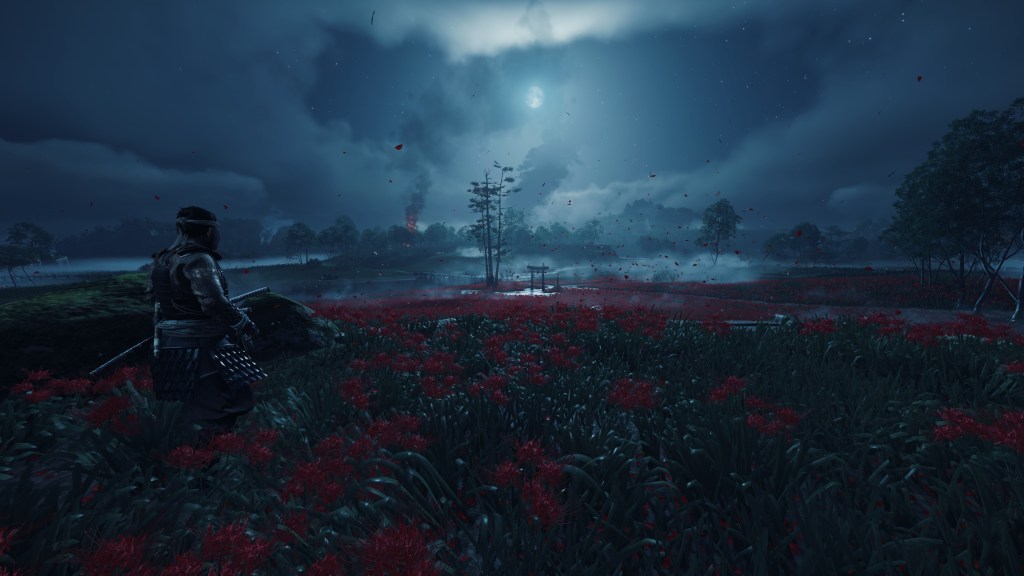
Vistas are regularly breathtaking and frame so cinematically, it regularly warrants stopping and absorbing the surroundings. Each one feeling like a living oil painting.
Newer releases certainly offer more in the way of graphical fidelity, facial animations, and particle effects. Yet Ghost of Tushima manages to do something special that I have not seen recreated in other games. The most important element in this rich tapestry is colour. The use of vivid colours in contrast with deep black shadows creates a distinct and striking visual style. Colour is used in such a deliberate way. With the vibrancy of reds, yellows, oranges on display it could have easily become cluttered or seemed haphazard, but this is never the case. As a result, moving from one biome to the next, feels all the more impactful. The framing and composition is also top tier. Particularly during boss fights. The camera often frames the action in such a way that it creates this feeling of personal drama, as well as grandeur where fights often take place in front of jaw dropping cinematic backdrops.
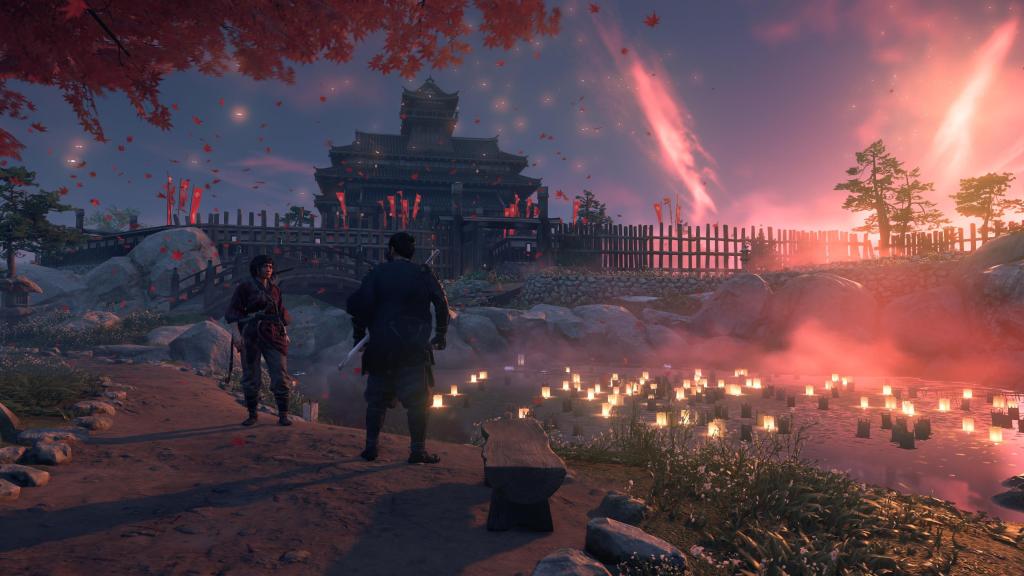
Given how good the art is in Ghost of Tsushima, it seems only fitting they leverage it to create a more compelling open world.
Open World and Quest Design:
Many AAA open world games fall tend to make similar yet problematic design choices. There are plenty of comparisons to be drawn between Ghost of Tsushima and the modern-day assassin’s creed releases. Assassins Creed Shadows, with its setting, has been analysed deeply with Ghost of Tsushima in mind. The recent AC games have become map marker and check box style open worlds, effectively forcing you down a set pathway and often dragging out the story of what would otherwise be very accomplished games. This design thesis is antithetical to what open world games are about. Exploration and player agency.
Ghost of Tsushima manages to skate gracefully around these potential issues, despite being born of the same open world blood. It forgoes RPG elements to create a more focussed and streamlined action-adventure game. The world itself guides you to your objective, with carefully placed points of interest and side quests along that path. It’s an elegant system that never slaps you in the face with map objectives and overcomplicated HUD elements. Without the map, the experience would largely be similar. Chimneys of smoke off in the distance indicate villages under attack. Birds and foxes steer you gently toward collectables and minigames. It really makes you feel responsible for the path you take, emphasising the feeling of player agency as you move through Tsushima. The game only tempts you to explore off the beaten path. Never feeling forced, or necessary. Yet when you do stray, there is often rewarding side content, in both its enrichment of the narrative or gameplay and cosmetic upgrades.
Mythic tales are a wonderful example of this. They open with a beautifully rendered ink blot cutscene, relaying the story of a mythical worried bit it friend or foe. This opening then entices you to explore the open world, hunting landmarks, combat challenges and more. The lure of a cosmetic or gameplay rewards acting as a motivator. And it is amazing how cosmetic rewards act as such a compelling motivator for engagement. Especially within the Samurai aesthetic. Although not a necessity, they often result in some of the most exciting moment to moment gameplay allowing for full flexing of your combat prowess. Particularly on a harder difficulty.
Conclusion:
Having now spent the time to explore Tsushima. I understand why people so readily recommend it. It is an incredibly well written adventure with a cast of memorable characters each with their own compelling backstories and motivations. It investigates the concept of legacy and what it means to carry the torch, even if felt unworthy. There is something undeniably special about the world Sucker Punch have built here. It entices exploration of its deepest corners and furthest reaches and more often than not feels satisfying and rewarding to do so.
All this would be for naught without allowing players to embody a Samurai. The intricate dance of combat and its challenge reward mastery. Once mastered you feel like an unstoppable force, but with difficulty in certain combat encounters never feels truly invincible, needing to focus to come through an encounter unscathed. It would have been easy to make the combat mindless to show how far superior the Samurai are in their combat prowess. But outside of a few gripes with range combat they managed to encapsulate this feeling of power and vulnerability perfectly.
All this would be good enough for a game like Ghost of Tsushima. Yet they surround this gameplay and narrative in what is one of the most beautifully realised renditions of Feudal Japan across any form of media. The vibrancy of environmental colour varied and constantly interesting biomes and vistas, and Sucker Punch’s own stylised flair wrap the package in an incredibly neat bow.
I believe that many games can learn an awful lot from the successes of Ghost of Tsushima. Finally playing through this game was a thoroughly enjoyable experience, and I am counting down the days before the Ghost of Yotei release to sink my teeth into more of what Sucker Punch have to offer. Especially given the access to more modern hardware.
 Gaming Acuity
Leave a comment